


Why Strong Cloud Growth Wasn’t Enough to Stop the Tech Selloff
By Edward Chenug
An autumn selloff swept through cloud stocks and chip companies even as customers were ordering more computing power. Alphabet fell about 13% in one session. The market was reconsidering the gains available to shareholders after the cost of building enough capacity to meet demand. The income statement and the cash flow statement were recording those gains on different schedules.
The revenue figures still pointed to demand
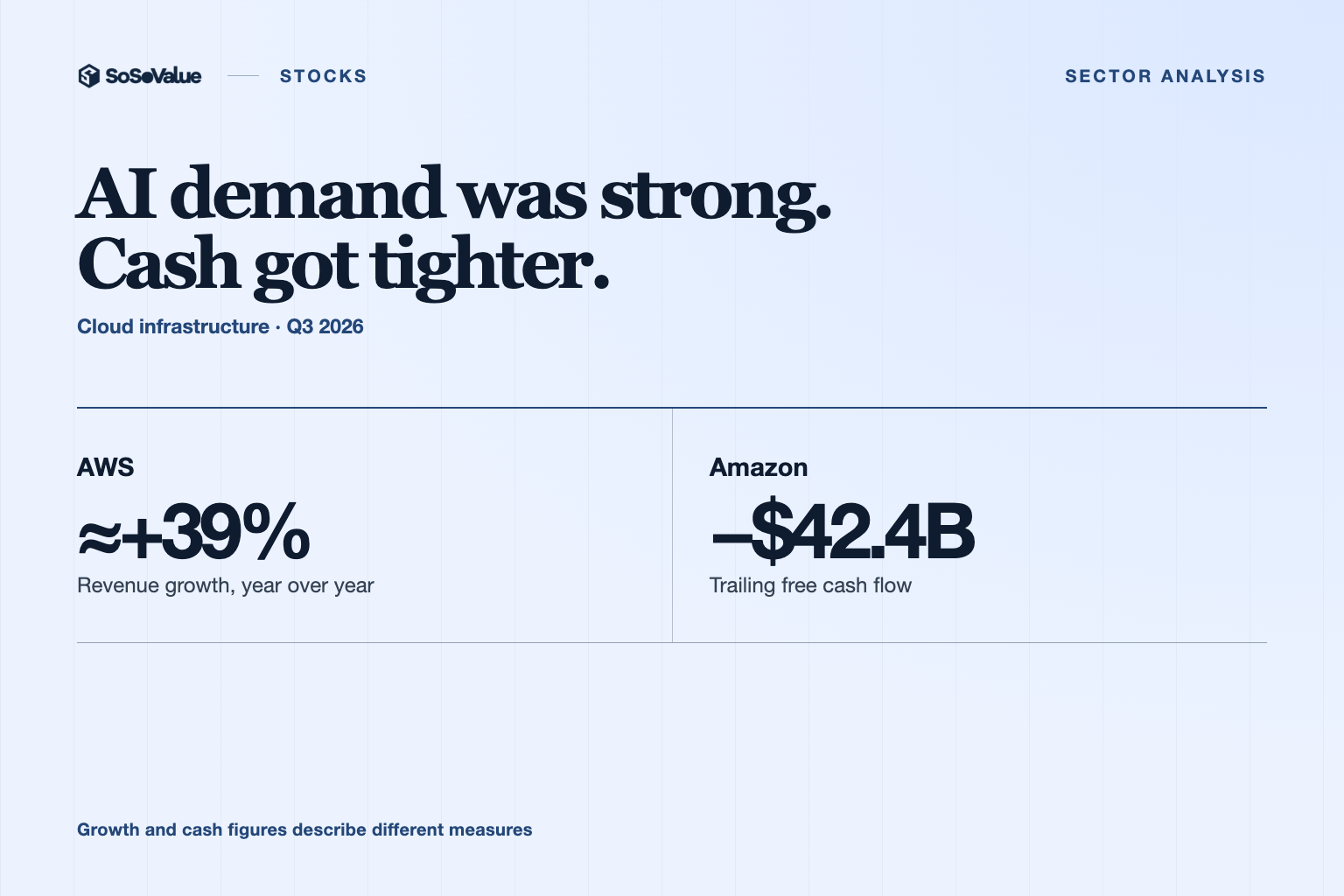
Google Cloud revenue grew 103% year over year and AWS grew about 39%, according to the figures in the October research. Cloud growth could support higher expectations for chip suppliers. It still left open how much deploying the equipment would cost the platforms buying it.
Amazon’s trailing operating cash flow rose 29% to $168.3 billion. The company attributed much of the free cash flow deterioration to a $94.8 billion year-over-year increase in net purchases of property and equipment. That turns healthy sales into a cash shortfall for a company expanding its asset base. The ultimate effect depends on how long the spending takes to generate recurring cloud payments.
Cash can deteriorate while operating profit improves
Equipment orders and construction payments reduce cash before the income statement recognizes their full cost through depreciation. Amazon’s reported trailing free cash outflow reached $42.4 billion even as operating cash flow grew. For a buyer of infrastructure, the expense timing matters as much as the customer-growth story.
Alphabet’s revenue also showed two sides of the AI transition. Cloud sales grew about 103% and Search revenue rose 12%. AI can improve engagement in an established advertising business, but the value of that engagement depends on conversion to revenue and the cost of generating a response. A paid cloud workload can have a more direct link to revenue, yet it uses capacity the company often has to buy first.
Microsoft’s latest Azure growth of 48% and group operating-income growth of 21% offered a different mix. An established enterprise franchise can use cash from existing contracts to help fund expansion. Even there, a higher capex budget can require the market to wait for the newest infrastructure to earn its return.
One company’s tailwind can be another’s expense
Tight supply supports orders and pricing at chip and memory makers while increasing costs on the other side of the invoice. When capital is expensive, markets can value buyers’ cash returns more conservatively even with strong hardware demand. Track each company’s spending, delivery and billing cycle before treating the selloff as a single view of AI adoption.
A semiconductor supplier may record revenue when the server equipment is delivered. Its customer may collect over the life of the asset. Elevated rates widen the cost of that wait and put a higher bar on the cash produced. This helps explain why stronger chip shipments, a tighter supply of memory and falling shares across the sector could occur in the same reporting season.