


Why Fresh Financing Revived the AI Trade Before Cash Returns Arrived
By Edward Chenug
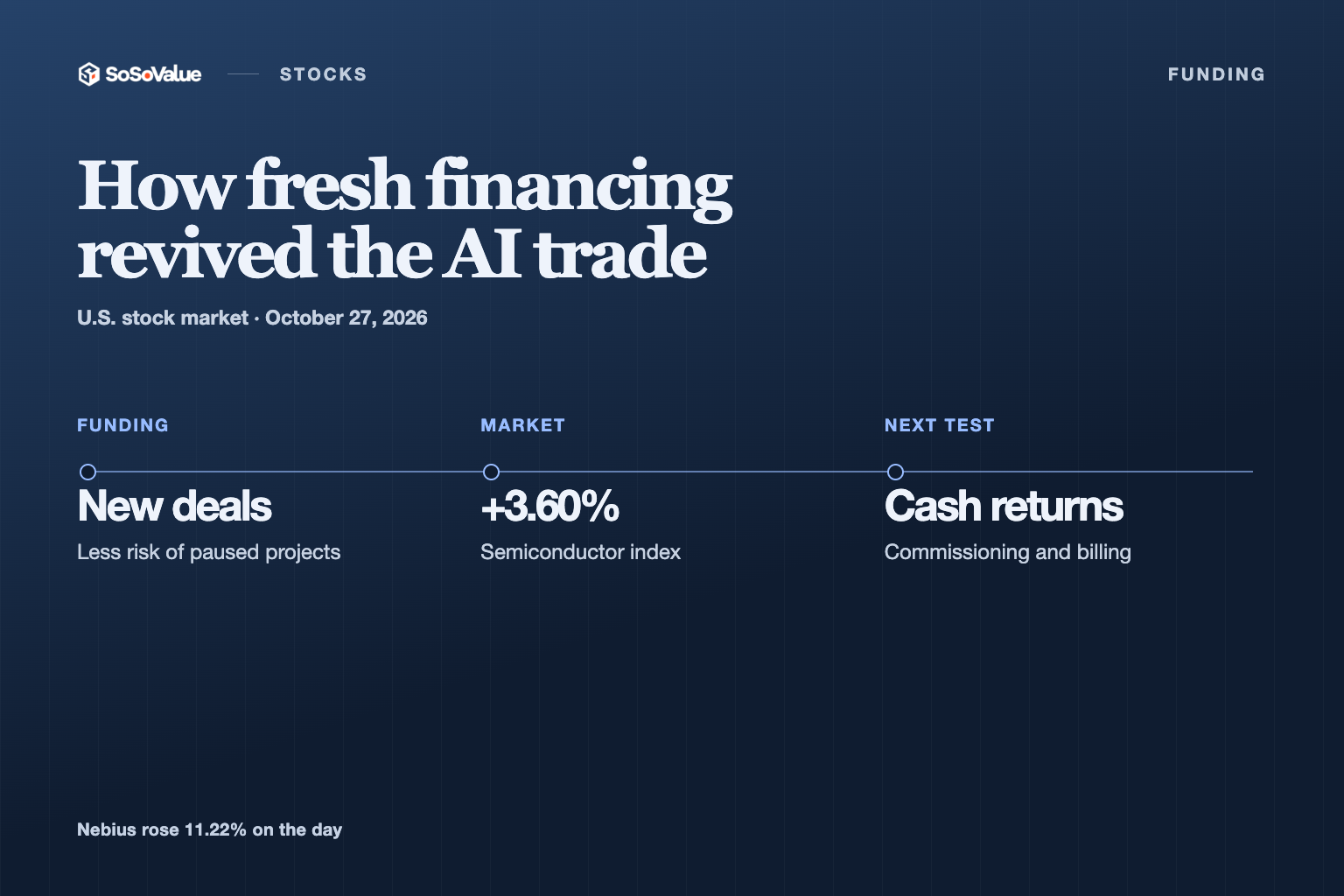
On October 27, the chip and cloud stocks hit hardest by financing concerns were among the first to recover. The move came as equipment-backed financing advanced and Meta found buyers for a large stock issue. Those events reduced the risk that some projects would be halted for lack of money. The prices that companies would pay for the money, and the returns they would have left after paying it, still differed sharply.
Funding reduces the risk of interruption
The Philadelphia Semiconductor Index rose 3.60%, Nebius gained 11.22% and CoreWeave added about 8%. News of financing backed by demand for data-center equipment gave traders more confidence that purchases could go ahead. Suppliers benefit when deliveries look more likely. Borrowers still have to build and collect enough revenue to service the capital.
Broadcom gained 4%, and companies on several sides of the buildout rose as markets reassessed order delays. Bloomberg reported demand of roughly five times the shares on offer for Meta’s common stock sale, which was increased to $25 billion. That demand showed room for large transactions even while equity investors expected dilution and a long wait for cash returns. Meta’s own stock still fell about 1.6% that day.
The hurdle rate barely moved
The U.S. 10-year Treasury yield edged from about 5.00% to 4.99%. With little change in the underlying yield, investors were repricing the chance that projects could attract financing and continue, rather than the broad level of interest rates.
The ten-year yield remained close to 5%. Financing was available at rates that continued to put pressure on projected cash returns, especially for projects exposed to construction delays. Creditors can be satisfied with firm customer commitments and equipment collateral while common shareholders require materially more cash to justify the valuation. Those groups can respond differently to news of a successful funding deal.
Commercial returns come after financing
A facility can pay for equipment today. Its ultimate economics depend on when the equipment is installed and what recurring cash it earns. Follow the commissioning date, the first customer payments and the financing cost as separate milestones to understand which companies gained more than a temporary reprieve.
The next day the rebound spread to Korean memory shares. Samsung Electronics and SK hynix were trading around 7.8% higher at one intraday point, with local earnings offering a separate catalyst. A funded buyer helps a chip supplier by increasing the probability that orders will be delivered. For that same buyer, the value of the financing depends on earning enough after equipment and interest payments. October’s rally gave a first indication of that distinction, and later billing and collections would offer evidence of returns.