


Why Anthropic’s IPO Filing Mattered to Nvidia and Micron
By Edward Chenug
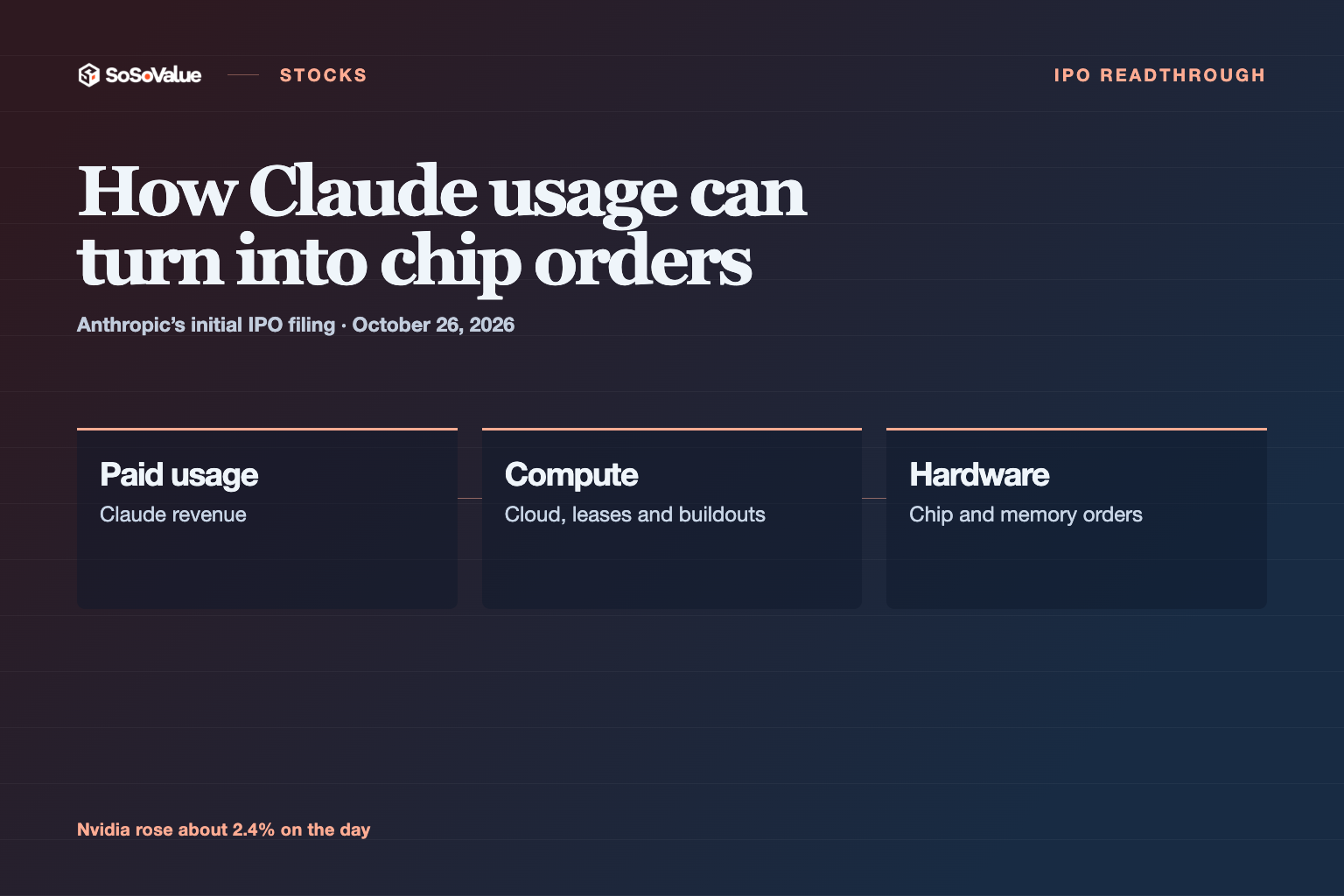
When Anthropic filed for its IPO on October 26, investors for the first time had a detailed public view of what customers were paying for Claude. Chip stocks rebounded. Their part of the story depended on how spending at the application layer would translate into additional orders for processors, memory and infrastructure over several years.
End-user revenue is part of the order story
Nvidia gained about 2.4% and Micron rose 2.98% on October 26 as the broader market rebounded. Investors had new evidence of demand from a major customer, alongside other news affecting the semiconductor sector.
The filing reported about $974 million in second-quarter operating income alongside the $11.6 billion in revenue. A profitable quarter gave investors one example of paid demand producing operating income before the company increased its costs in later periods. The semiconductor index gained about 2.8% on the day and remained roughly 12% lower for the month. One disclosure had improved the evidence for demand while leaving the financing questions behind that drawdown open.
The hardware link runs through capacity choices
Paid usage can increase demand for accelerators, memory and other infrastructure. The value to each supplier depends on what the customer rents, leases or builds, the hardware it chooses and how early it reserves capacity. Model efficiency can also lower hardware needed per task while encouraging more tasks overall.
Every dollar of model revenue does not translate into the same amount of new hardware. Some usage goes through rented cloud capacity, some through long-term leases and some through dedicated assets. An operator with spare computing power can serve more users before ordering another system. A larger customer may reserve capacity ahead of expected demand. Hardware sales track those purchasing choices as much as the growth in applications.
An IPO can finance the loop
Fresh capital can allow a model maker to sign longer commitments. Those arrangements turn into durable demand for suppliers when the model maker can fill its capacity and collect from customers. Compare paying usage growth with the next incremental hardware orders to see whether the economics support another investment cycle.
Meta also announced plans that day to raise up to $95 billion through stock offerings, and its shares fell about 1.9%. A buyer with funding can make more credible orders for suppliers. The funding announcement can still weigh on its own shareholders if new equity dilutes their stake or the expected profit from new facilities comes later.
That makes the initial Anthropic filing a better signal about commercial demand than about the eventual distribution of profits. The stronger follow-through for chipmakers would come from the model developer securing capacity at growing volumes and using it enough to support another round of purchases.