


How to Read Anthropic’s $80.7 Billion Loss Alongside a Profitable Quarter
By Edward Chenug
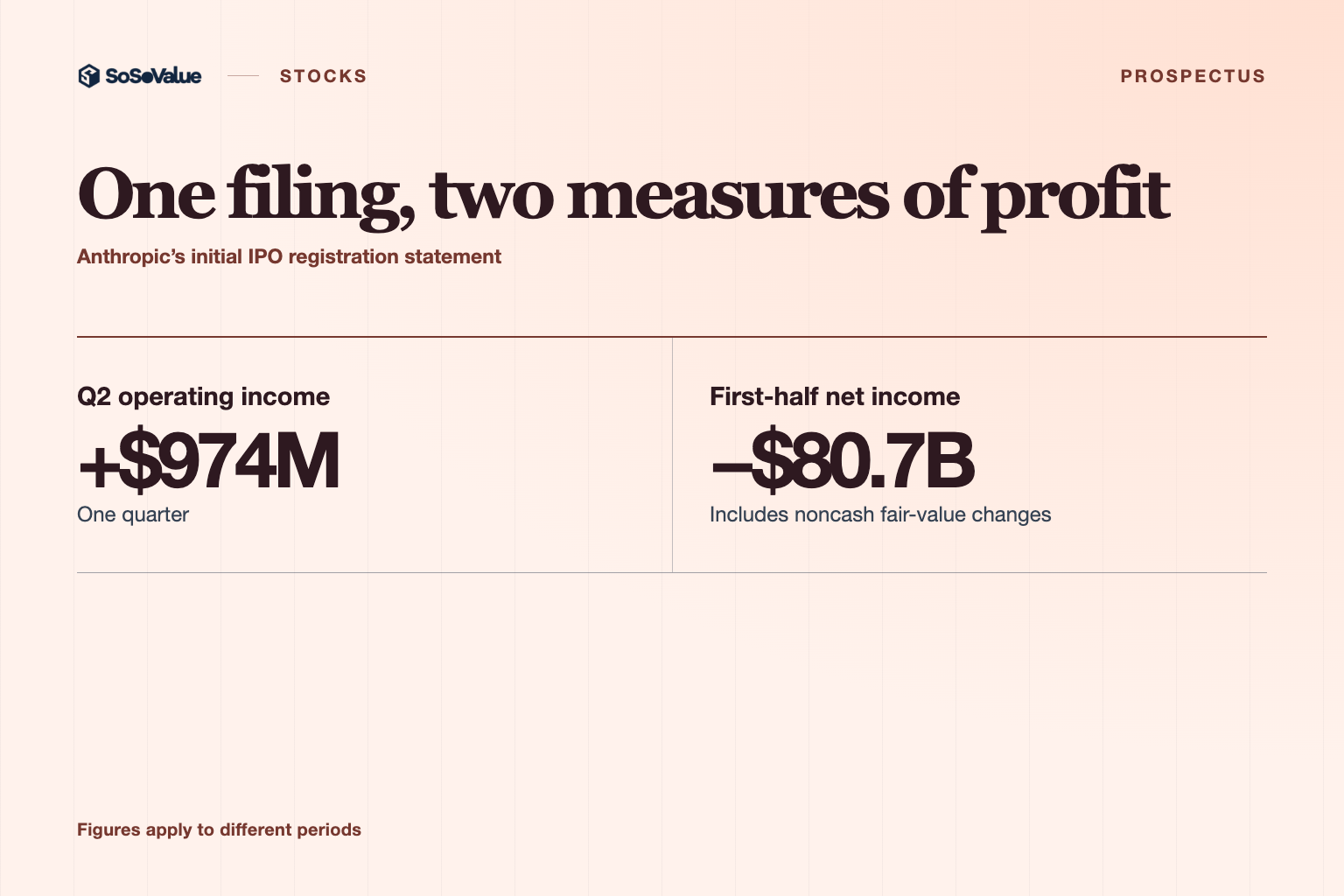
Anthropic filed for its IPO with a first-half net loss of about $80.7 billion and a quarter of positive operating income. Each figure was useful for a different purpose. The filing let investors distinguish the costs of serving Claude, valuation changes on past fundraising and the cash flowing into the company.
Start by matching periods
The roughly $80.7 billion net loss covered the full first half. The $974 million GAAP operating profit was for the second quarter alone. The periods and the kinds of expense included in each figure differ, which explains why the two numbers could describe the same filing.
The scale of growth made the changes in accounting especially striking. Revenue rose from $1.16 billion in the first half of 2025 to about $16.29 billion a year later. Q2 accounted for the majority of that later figure. An increase in the value of financing instruments issued before the offering can create a large charge as the company’s valuation changes. Looking at operating income isolates the recognized costs of the core business from that particular charge.
Operating profit was also sensitive to capacity choices. Training, inference and infrastructure enter different parts of the income statement. A quarter that mainly benefits from previously contracted capacity can have a stronger result than one in which the company takes delivery of expensive supply for near-term demand.
Cash flow gives a separate view
Operating cash flow turned positive in the first half as demand expanded. That reflects the timing of collections and operating payments as well as profitability. Upfront collections and the timing of spending can create swings. Cash generated by operations is also different from what remains after capital expenditures.
The speed of collections makes another difference. Cash from customers can arrive before or after the company recognizes the associated revenue. Large payments for compute can also arrive in a different period. Putting reported earnings and cash from operating activities next to each other helps identify when the quarter was helped by the timing of cash or the use of a less expensive capacity mix.
Usage matters for how investors model the next quarter
Roughly four-fifths of first-half revenue came from usage-based products. More customer activity can increase revenue quickly, with the cost of dedicated and rented compute affecting the operating result. Read cash flow and operating margins alongside usage growth to see whether the business is gaining leverage.
First-half consumption revenue was roughly $13.1 billion, compared with about $3.2 billion in subscriptions. Consumption can rise quickly as more projects use the model, and it means revenue remains sensitive to how heavily customers use it. The company can earn more on those workloads when usage grows faster than the expense of serving them. As a result, the net loss explained the imprint of financing on the accounts, while later operating margins and cash flow would show whether profitable quarterly growth could be repeated.