


Why Big Tech Went Global to Finance AI
By Edward Chenug
On November 2, 2026, Alphabet tapped euro bond buyers and Oracle went looking for both bond and equity capital. The announcements reflected a search for investors who could fund AI infrastructure before the projects paid for themselves. Where companies raised money and which securities they sold mattered as much as the amount they announced.
Currency markets broaden the buyer base
Alphabet’s euro offering was one of several announcements as the Nasdaq-100 fell 1.4%, taking its decline from an October high past 10%. Reaching investors in several markets can help companies avoid concentrating maturities or depending on one source of funding.
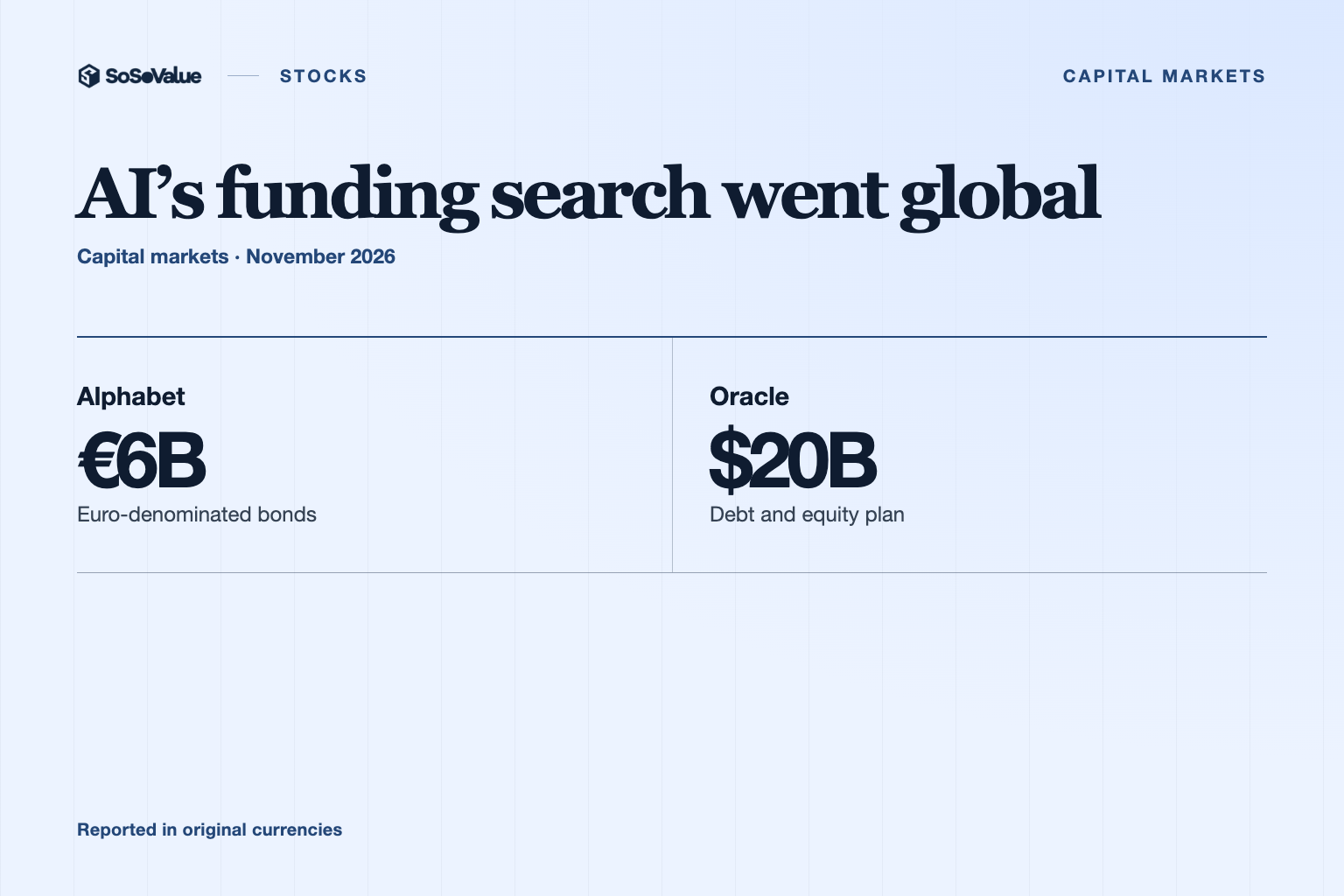
Alphabet’s €6 billion issue put part of its financing in the hands of international bond investors. Meta was also reportedly considering an offering of at least $20 billion across markets. The pricing of a bond inside its home market is only part of the comparison. Currency hedges, maturities and the flexibility to refinance determine whether a new funding market actually makes long-lived assets cheaper to carry.
The security determines who bears the risk
Oracle proposed raising $10 billion from debt and $10 billion from common equity. Bonds preserve ownership percentages but add interest and repayment obligations. Equity absorbs more of the project risk and dilutes existing holders. A single funding announcement can therefore have different implications for the two groups.
Oracle’s proposal divided the $20 billion evenly between debt and common equity. The equity leg gives creditors a larger cushion and asks current holders to share future earnings with additional owners. The debt leg gives the company cash without surrendering the same ownership, but calls for interest and principal regardless of when sites open. A financing package can lower the chance of a suspended project while offering shareholders less value per share than they had assumed.
Revenue arrives after much of the buildout
Cloud demand can be growing while construction and equipment payments exceed the cash produced by the new assets. Access to funding buys the time needed to bridge that gap. Compare funding cost and maturity with power availability, contracted starts and actual cash collections to see which plans can pay their way.
Alphabet had just reported quarterly Cloud revenue of about $30.7 billion, up 103% from a year earlier. It spent about $51.4 billion on capital expenditure across the group and recorded negative free cash flow of about $9.1 billion. Microsoft was generating positive free cash flow on its reported measures. The contrast shows why growing cloud revenue leaves issuers with different exposure to the price and availability of external capital.
The international search extended to equity. Anthropic planned to include an allocation of up to around $3.5 billion to Japanese investors in its U.S. IPO. The range of funding choices broadened while dependence on cash timing remained. To compare returns, investors still needed to match the maturity and cost of the securities with when the assets would begin earning revenue.