


By Edward Chenug
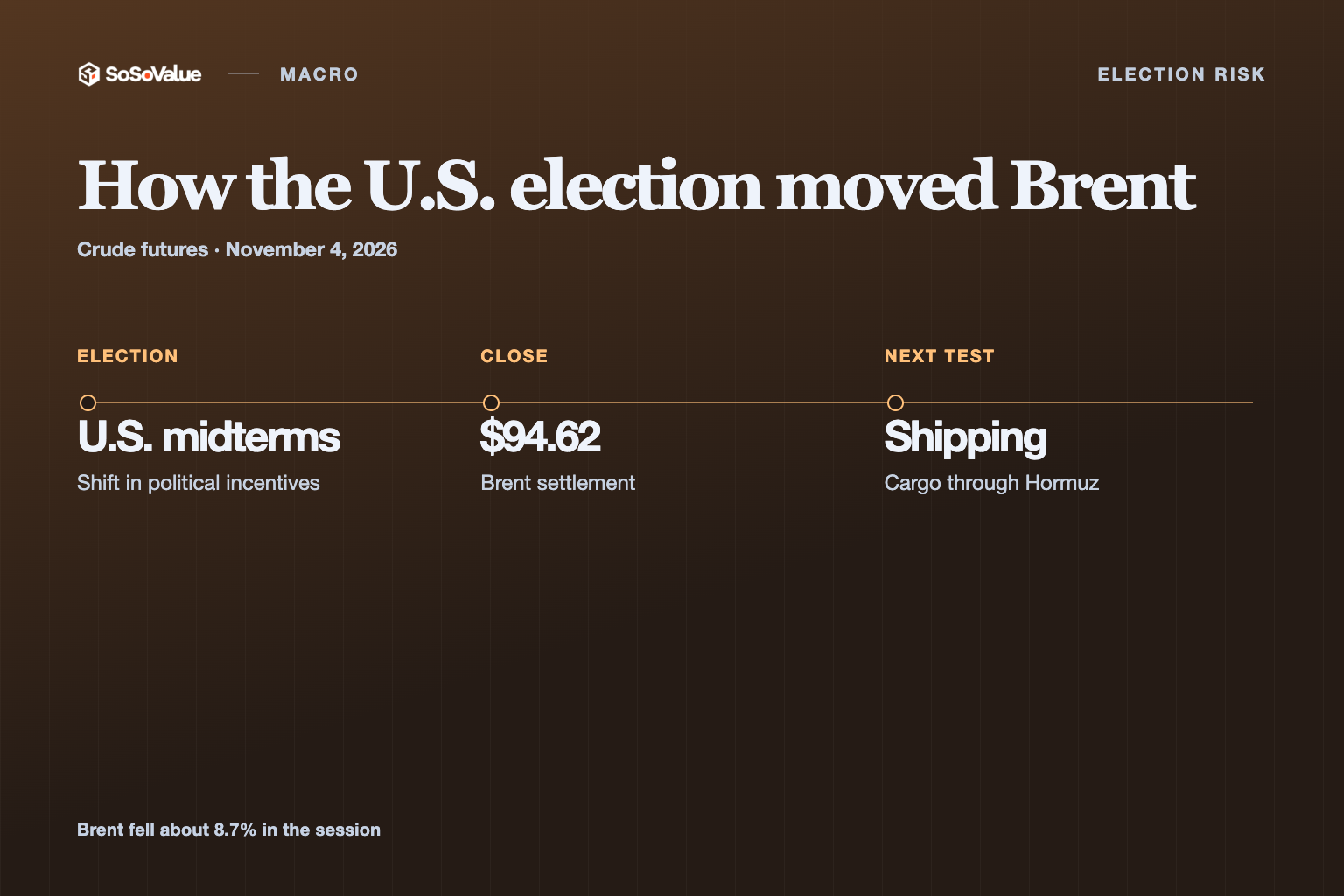
Brent closed down about 8.7% on November 4, 2026, after election results and JD Vance’s remarks changed expectations for U.S. policy toward Iran. The plunge assigned a lower price to the possibility of a long war and an extended supply shock. Shipping companies and crude buyers had to make a separate judgment about whether the conditions under which they moved barrels had changed.
A ceasefire acquired greater political value
Democrats’ gains in Congress and Vice President JD Vance’s criticism of the war led traders to reassess Washington’s appetite for a prolonged conflict. Brent settled at $94.62, down about 8.7%. The political shift altered traders’ assessment of likely U.S. policy and the duration of supply disruption.
The election altered the incentives of more than one part of the government. Democrats’ gains put more attention on congressional oversight of the war. Vance gave Republicans a public reason to reconsider the cost of the conflict. The White House had to weigh any reduction in inflation pressure against the political cost of agreeing to terms that did not appear to deliver its aims.
Greater urgency also changes bargaining power
More pressure for an agreement can create room for diplomacy. It can also encourage a negotiating counterpart to seek better terms. What matters to an oil buyer is whether the outcome reduces the probability that a cargo is delayed, rerouted or cancelled, including through the Strait of Hormuz.
Tehran could view that urgency as bargaining power. A proposed pause also has to account for the military and diplomatic decisions of other governments in the region. A ceasefire can initially improve the odds of transit before transport companies change their rates. The underwriting of war-risk insurance and shipping schedules depends on what has actually changed for a crew and cargo on the next passage.
Why prices can move ahead of supply
A future discounts the possibility of supply disruption through its delivery period. Imports are priced against benchmarks but carry additional costs for freight, insurance and, in a volatile period, the risk of missed delivery.
The November settlement gave importers a lower price for the benchmark. It could leave the cost of actually delivering crude high if ships remained scarce or if freight and insurance premiums were slow to fall. A fall in delivered costs requires several signs to line up: vessels making repeated transits, freight prices falling, and export volumes stabilizing across more than a single loading window.
A market can reasonably anticipate those improvements and reward early evidence of diplomacy. It can also give back the move if the negotiations fail to change conditions for carriers. Election results shifted expectations on November 4. The durable effect on energy costs depended on how quickly the political opening reached the physical market.