


What Bybit and Binance Teach About Recovering Stolen Crypto
By Edward Chenug
Investigators can know where stolen crypto moved and still be months away from returning it. The Bybit theft in 2025 and the Binance theft in 2026 made the distinction visible at large scale. The cases show how asset visibility, legal control and customer restitution can proceed on separate timetables.
Visibility is a starting point
The FBI estimated the February 2025 theft from Bybit at about $1.5 billion and attributed it to North Korea. Analysts could follow the changing location and form of portions of the assets. Reporting on the share traceable offered a different measure from the sum available to recover.
Two months after the Bybit incident, the exchange said about 68.6% of the assets were still traceable and about 3.8% had been frozen. Those figures were a snapshot of different stages. Analysts following transfers can reconstruct a record that supports later legal action. It takes additional evidence and the cooperation of the institutions able to act on that record to restrict an asset.
Intervention requires authority and cooperation
On November 12, the U.S. Justice Department described an investigation in which authorities and service providers had acted to restrain assets after the Binance theft. The legal steps involved coordination between parties with different responsibilities and jurisdictions.
A freeze limits movement while authorities determine the assets’ status. A court order can identify what law enforcement is authorized to restrain or seize. Where an intermediary has custody or an issuer can implement an order, timely cooperation can prevent the funds from moving while a case is reviewed. Investigators and exchanges still need a reliable record to distinguish property that can be restrained from unrelated customer balances.
The Justice Department’s Binance update illustrates the gap between those steps. It described more than $2.7 billion in collective freezes and more than $1.2 billion subject to U.S. court authorization. Those amounts answer different questions and can overlap. Adding them together would inflate the sum of funds returned to anyone.
Three figures answer three questions
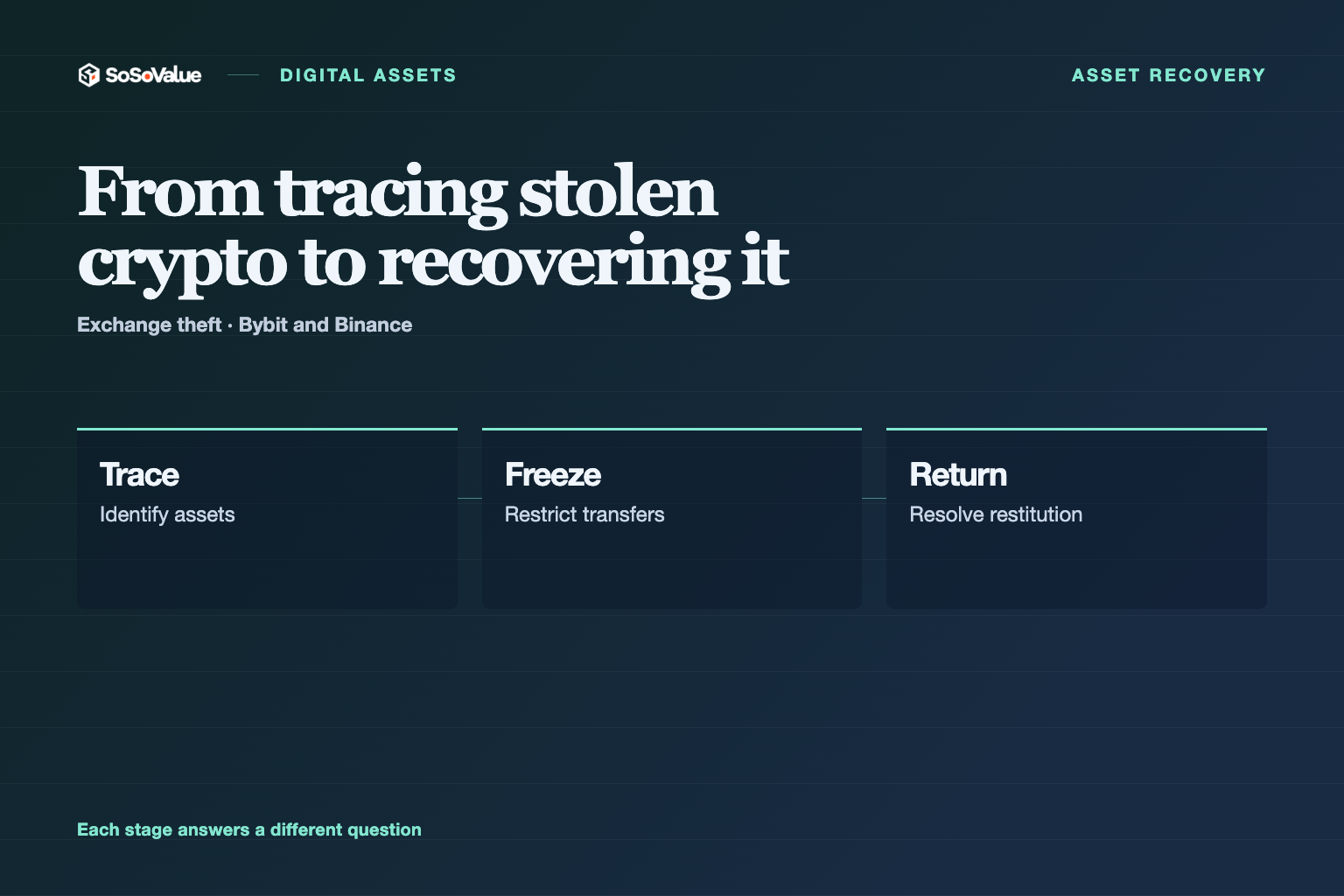
Traceable assets show what investigators can still follow. Frozen or restrained assets show what someone can prevent from moving. Returned assets show what actually comes back. For customers assessing the aftermath, the distinctions explain why tracing progress and restored access can move at different speeds.
An affected customer may also be made whole through reserves or compensation before authorities recover a specific asset. A later restitution payment follows a legal or exchange process and may take longer. Exchange disclosures are most informative when they show which step has occurred, how much of the asset pool it affects and the date on which the figure was measured.