


What the 11% Chip-Stock Rebound Said About the AI Trade
By Edward Chenug
A November rebound in chip shares arrived as crude prices fell and the rest of the equity market recovered. For the semiconductor index, the move was powerful enough to reverse a large part of the previous selloff. It brought relief to valuations and a renewed bid for a sector where order books had held up better than concerns about its customers’ financing.
Cheaper oil helps valuations before it helps spending
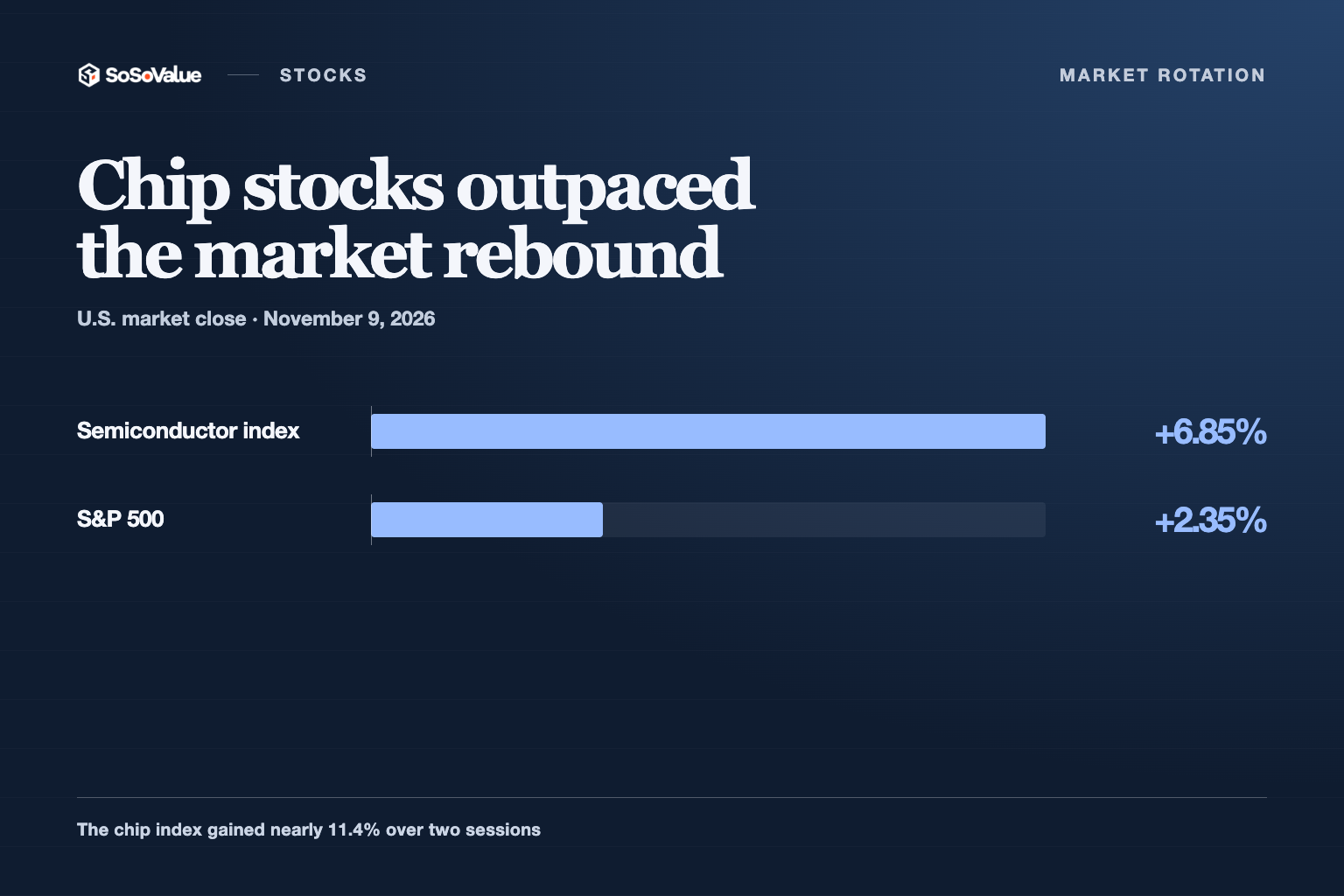
The Philadelphia Semiconductor Index gained 6.85% on November 9, bringing its two-session rebound to nearly 11.4%. The S&P 500 rose 2.35% that day. Falling oil eased immediate inflation fears, which encouraged risk taking. The relief worked through valuations well before it could change data-center budgets.
The Nasdaq-100 rose about 3.4%. Nine of the S&P 500’s eleven major sectors gained more than 1%, with industrials and consumer discretionary stocks up about 4%. Brent settled 5.85% lower. That breadth is one reason to read the session partly as a general retreat in perceived risk rather than exclusively as a change in chip demand. The ten-year Treasury yield still edged up to about 4.87%.
The supply chain still had conflicting incentives
Cloud customers wanted more capacity. Chip and memory suppliers could benefit from sustained orders, while the same component costs could weigh on their buyers’ margins. Nvidia also faced company-specific leadership scrutiny. A broad semiconductor rally could coexist with a meaningful discount for an individual name.
Underlying demand had support in the operating figures. AMD reported data-center revenue of about $8.5 billion, up 97% from a year earlier, and projected total fourth-quarter revenue of about $17 billion. Another part of the supply chain had a different profile. AWS revenue rose about 39%, while Amazon’s trailing free cash flow swung to a $42.4 billion outflow. The supplier can collect when it ships; a cloud customer may wait much longer to earn a return on the installation.
Cash returns are the test of a lasting recovery
The rebound left high financing costs and construction constraints in place. To gauge whether demand can support valuations through the next cycle, watch for new orders converting into deliveries and cloud customers turning those deliveries into billable capacity and cash.
A similar timing issue runs through financing. Nebius had secured a $3.5 billion facility with a 364-day maturity. A short funding commitment can get equipment on order and still require refinancing before the project’s cost is recovered. A convincing recovery for the whole chain would show both continued hardware demand and commercial data centers generating cash while financing remained available.
The semiconductor index had fallen more than 12% on the preceding Thursday. A large two-session rebound can reflect that starting point as well as new information. The strongest long-term implication of the November move would come from higher orders funded on better terms, conditions that a rally and a fall in oil merely made more plausible.