


Why a Data Center Delay Hits an AI Startup Harder Than Microsoft
By Edward Chenug
A data center takes years to finance, build and connect to the grid. The November 5 reversal in AI stocks drew attention to what happens when one of those steps moves out. For a company with operating sites, an unfinished project competes with the rest of its portfolio for capital. For a newer cloud provider, the same site may be the source of the cash expected to cover next year’s obligations.
Start with the delivery schedule
Tighter scrutiny of construction, power and financing can push back commissioning. A cloud giant with operating sites can keep billing customers and redirect some demand to the installed fleet. An independent provider with undelivered capacity has fewer options, especially when its contracts tie cash receipts to milestones.
Texas had emerged as a source of power and permitting uncertainty in the post-election research. Utilities and local governments have to consider how new loads affect generation, the cost of connections and other electricity users. A building can look near completion and still depend on a grid connection. Customers generally pay for useful capacity, which makes the date at which a site is energized and accepted more important than the nominal completion date.
Carrying costs have a schedule of their own
Interest and equipment commitments can continue during a delay. With receipts arriving later, a project may need fresh financing at unfavorable terms. Chip suppliers have their own exposure if delayed sites push out hardware deliveries and recognition of sales.
The next transmission point is the cash balance. When a site is delayed, equipment lease costs and interest can continue even if the first bill slips a quarter. A large cloud company may have several facilities and other sources of cash to absorb that delay. An operator relying on one project can have to refinance earlier than expected. Lenders will look closely at contracted billing dates and the amount of equity left to absorb losses.
The market revised its interpretation quickly
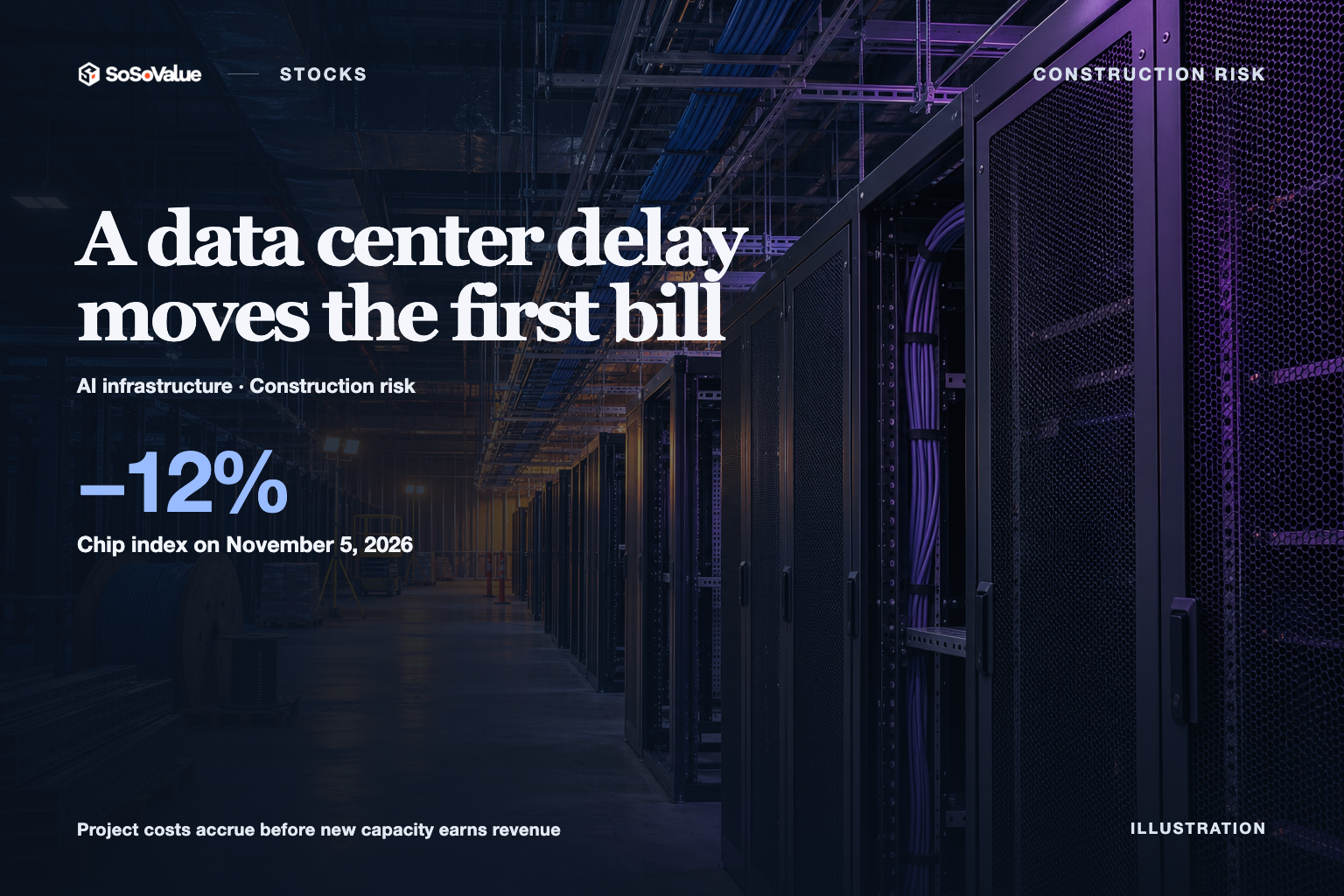
Investors initially treated slower construction as budget relief for major platforms. The next day they reacted more strongly to delays in revenue and cash collection. The semiconductor index fell 12%; CoreWeave lost roughly 10% compared with around 3.6% for Microsoft. The lasting evidence would be in energization dates, first customer bills and financing covenants.
The selloff reached well beyond cloud stocks. Nebius fell about 15% and IREN about 17%. Memory suppliers also fell sharply. Some of that weakness reflected a separate concern about downstream demand: Qualcomm’s handset revenue was down 26% from a year earlier, a reminder that memory demand also depends on phones and other devices. The drop in chip stocks bundled a construction shock with risks elsewhere in the supply chain.
The distinctions become clearer over subsequent reporting periods. A smaller cloud provider can offer an attractive backlog and still run into debt-service pressure if a customer accepts its site later than planned. The meaningful operating milestone is progress from the booking through energization, billing and collections. It is that sequence that determines how long the company must finance the project.