

How Meta, SpaceX and Neoclouds Paid for the Wait Between AI Orders and Cash
By Edward Chenug
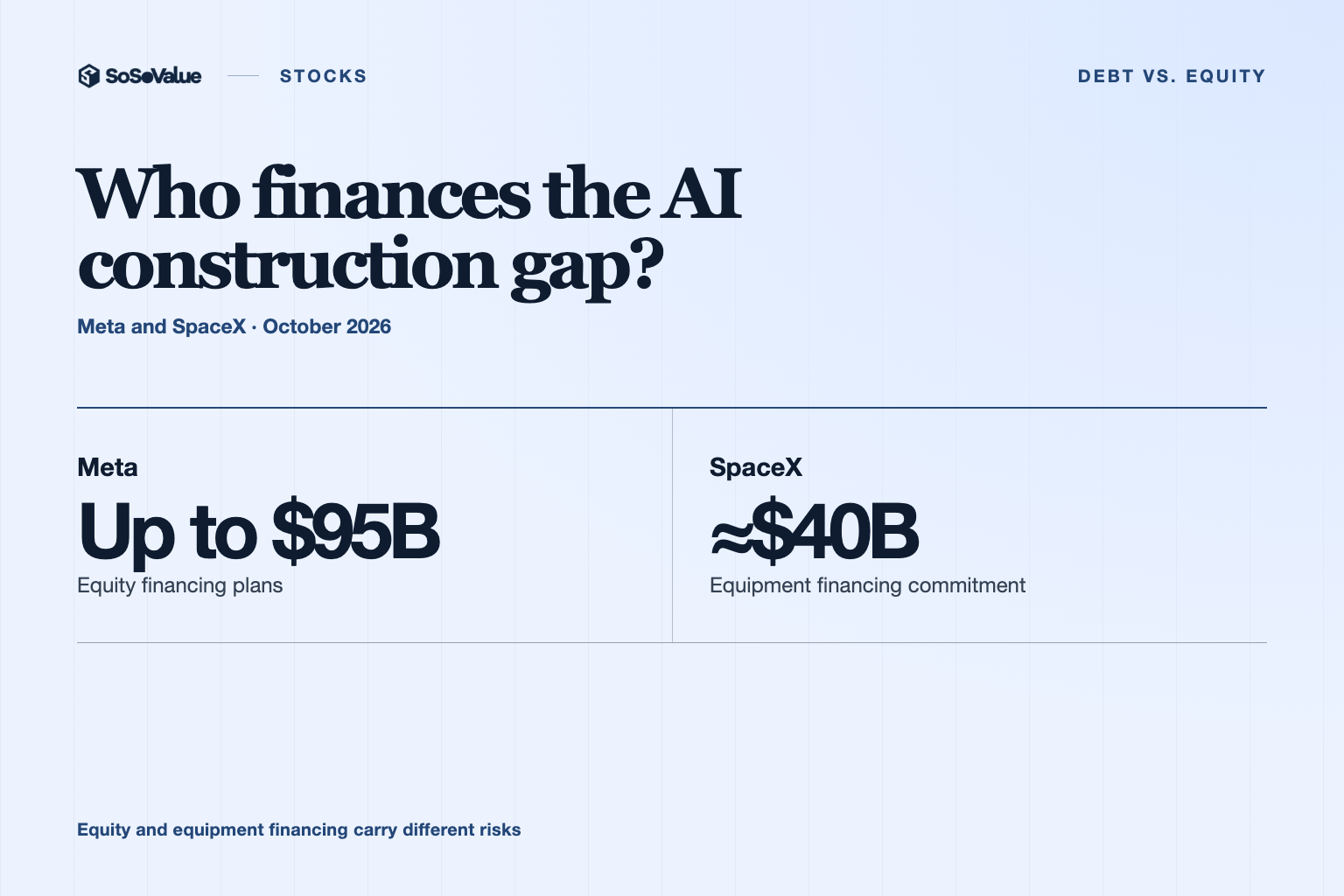
Meta set out plans for up to $95 billion of equity-related funding. SpaceX pursued about $40 billion in equipment financing. Both companies were buying time between placing large hardware orders and receiving cash from the projects those orders would support. The contracts spread that risk differently among investors, lenders and equipment owners.
Meta spread the risk through equity
A company can sell shares in stages as construction advances and markets change. Meta was choosing a funding source that could spread risk across a larger share base while keeping cash from operations available for other obligations.
Meta outlined about $35 billion of common stock and mandatory convertible preferred offerings, together with a future $60 billion at-the-market program. In the latest quarter it had generated about $32.79 billion of operating cash while spending $34.91 billion on capital expenditure including principal on finance leases. The proposed equity financing could cover part of that gap, with the effect on existing owners depending on how much was sold and at what prices.
SpaceX tied financing to equipment
Under equipment financing, the terms typically tie payments to the use of defined hardware. The financing works best if the agreement and customer receipts can cover their obligations over similar periods.
SpaceX reached a financing commitment with an Apollo-managed entity for GPUs and related equipment, with closing expected by year-end at the time of the announcement. The equipment would help secure the financing. Future receipts would have to support the cost of its use. Capacity that comes online late or delivers less revenue than projected can make the fixed payment schedule harder to cover even when investors still want AI capacity.
Equity places more of the project risk with shareholders. Equipment finance can preserve ownership but creates a contractual claim on the business and its assets. It matters which choice a company has available when cash returns are several years away.
Neoclouds face a narrower set of choices
Independent cloud operators have less flexibility to use the cash from another business to bridge a construction delay. Financing depends more heavily on specific equipment, contractual protections and the customer signing for the capacity.
Nebius cited more than $40 billion of long-term commitments from investment-grade customers alongside its $3.5 billion financing facility. That kind of customer can make a borrower more creditworthy. The company still has to pay for construction and equipment ahead of much of the revenue. Across operators, the size of the funding gap and the reliability of those customer payments are better measures of who can keep building than the headline value of the backlog alone.