


How MSCI’s Strategy Decision Changed the Bitcoin Treasury Trade
By Edward Chenug
An index decision changed the amount of stock benchmark trackers would need to own. For Strategy, its importance went further. The company had used demand for its shares to finance a growing bitcoin treasury. In the week of November 2–8, almost two-thirds of the money it raised from common shareholders went toward buying back a preferred issue. The index change made that competition for capital more consequential.
Losing a source of index demand
The index decision removed a source of demand tied to the benchmark. For a company that sells equity at regular intervals, the price and depth of demand from those investors can matter as much as the day funds adjust their portfolios.
MSCI’s November review set the changes for after the November 30 close. Passive managers have to bring portfolios into line with the benchmark, and other investors can trade ahead of a rebalance. The impact on Strategy’s ability to raise money depends on how much demand remains from investors buying for bitcoin exposure and the terms they require. A lower equity price means more shares must be issued to raise the same amount of cash.
Follow the proceeds
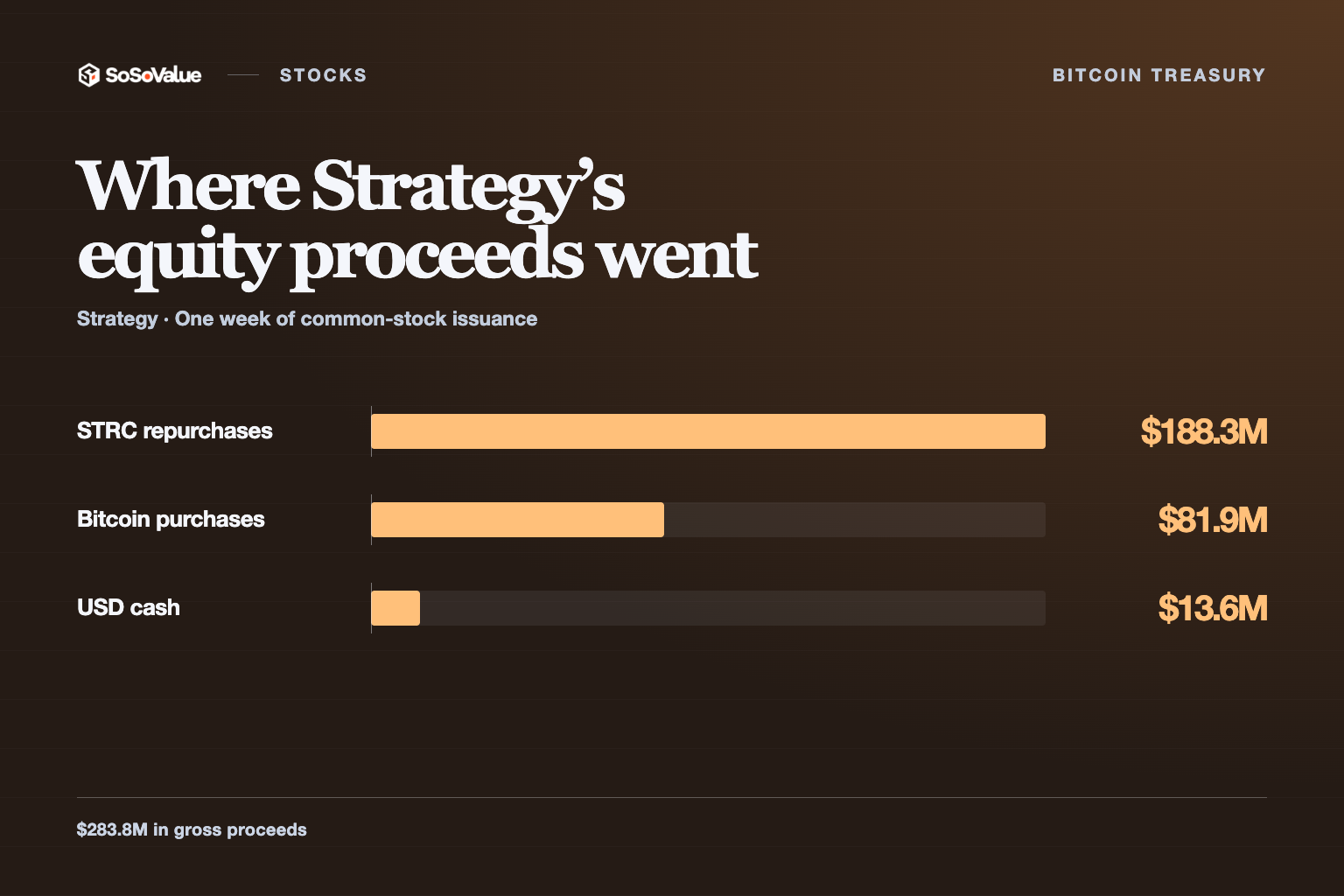
In one week highlighted in the research, Strategy raised $283.8 million by selling common shares. It used $188.3 million to repurchase STRC preferred stock, leaving less than 30% of the proceeds for bitcoin purchases. Repurchases can serve a capital-structure purpose, but the allocation illustrates how financing obligations compete with expanding the treasury.
Strategy disclosed about 2.05 million common shares sold in the week. It spent about $81.9 million on bitcoin and retained about $13.6 million as dollar cash. Buying back STRC can manage a senior claim and support the funding structure. It also reduces the amount of bitcoin the company can acquire with the proceeds of that same sale.
At November 8, Strategy reported a $4.77 billion dollar reserve. That gave it a buffer against a weak funding market. Third-quarter revenue of $125.4 million and preferred dividends of $419.6 million illustrate the difficulty of replenishing that buffer from the operating business alone. Revenue is an imperfect proxy for cash generation, but the difference shows the scale of ongoing financing needs.
The number to watch is per share
Common shareholders care about the net exposure they own per diluted share. A larger bitcoin balance can come with a smaller interest per share if the share count grows faster. Preferred dividends and cash reserves affect the value of that interest.
At 850,364 bitcoins, a $1,000 move in the token price changes the gross value of the holdings by about $850 million before liabilities. Falling bitcoin can therefore reduce common equity value at the same time as it becomes more expensive to issue stock. A rising bitcoin price softens that effect. Whether a new issuance adds value depends on the price of the shares, where the proceeds go and the remaining claims ahead of common stock.