


How Strong Rubin Sales Changed Nvidia’s Succession Calculus
By Edward Chenug
Jensen Huang offered to return to Nvidia if directors wanted him back. The board’s first answer came in the same earnings call that highlighted his influence on the business. The Rubin platform had ramped quickly and the company raised its growth outlook. That operating strength gave directors time to consider which parts of Huang’s job they most needed a permanent chief executive to do.
Shipments bought the board time
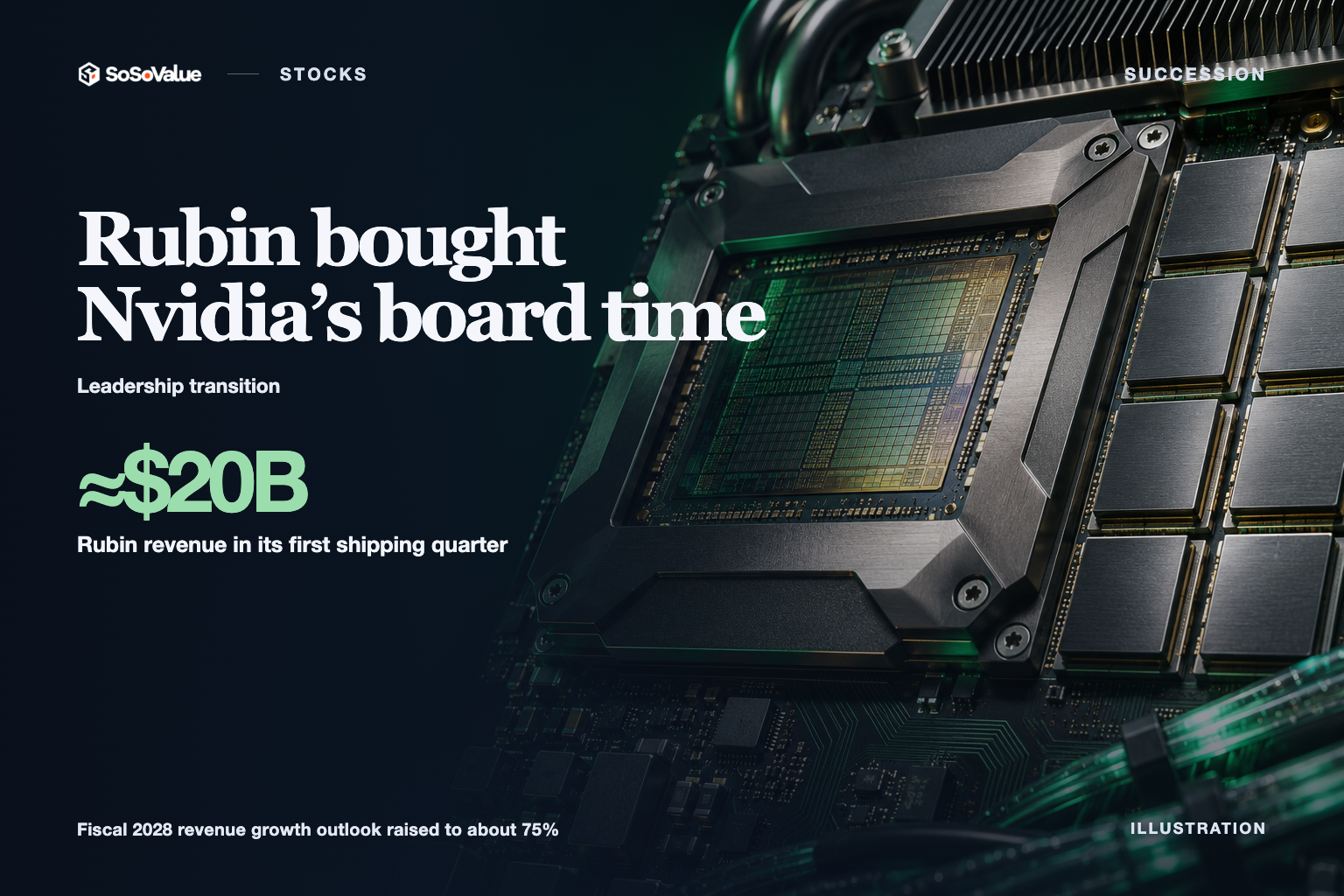
Jensen Huang said he was open to returning if the board wanted him. Chairman Harvey Jones said the board did not intend to reinstate him. Interim CEO Colette Kress raised Nvidia’s fiscal 2028 revenue growth outlook to about 75% from 70%, after Rubin generated nearly $20 billion in the platform’s first quarter of production shipments.
The quarter ended before Huang resigned. The figures showed the strength of orders and work already in train. Kress and the board still had to demonstrate their ability to secure the next cycle.
Nvidia reported fiscal third-quarter revenue of $115.8 billion, up 103% year over year. Data center sales accounted for $107.6 billion. Kress said the company had secured advanced packaging and memory supply, and shares rose more than 4% after hours. The business could enter the succession with products customers were already buying and a supply chain equipped to deliver them.
Follow the new commitments
Delivered racks depend on existing orders, packaging capacity and customers’ ability to power data centers. Winning the next platform commitments involves fresh negotiations over supplier allocations, purchase guarantees and export compliance. A delay caused by an unfinished data center tells investors something different from a major cloud customer withholding its next order.
Huang’s negotiating role was especially valuable when one party’s decision depended on another’s. A cloud customer wanted a reliable delivery date before reserving power and space. A manufacturer wanted confidence in volumes before committing scarce production capacity. Nvidia, in turn, could need a credible customer order to justify either commitment. The caliber of the interim team will be visible in how it keeps those decisions synchronized for the next platform.
The transition also changed governance around export compliance and national security. Nvidia put those responsibilities under a board committee. Directors weighing a return would have had to decide which multiyear commitments required their approval and what authority to leave with the executive negotiating them.
The board is choosing a decision process
A permanent appointment also determines who can approve multiyear commitments and how the board oversees them. Continued shipments give directors time. New orders and new supply agreements will show whether they have used it well.
Strong shipments through the transition would mostly confirm that the order book Huang left behind remained intact. The more revealing test would come from customers making decisions on another generation of systems and suppliers allocating another round of capacity. A high-profile return would become a stronger business proposition if those decisions began slipping specifically because the current executives could not close them.