


By Edward Chenug
U.S. inflation surprised on the high side in October 2026, leaving investors more confident that the Federal Reserve would keep tightening. It settled less about the size of the next move. Core prices had risen at a steady monthly pace through three readings, while energy’s contribution had dropped. That mix sharpened the argument over whether to move faster or stay on a gradual path.
The core made the release consequential
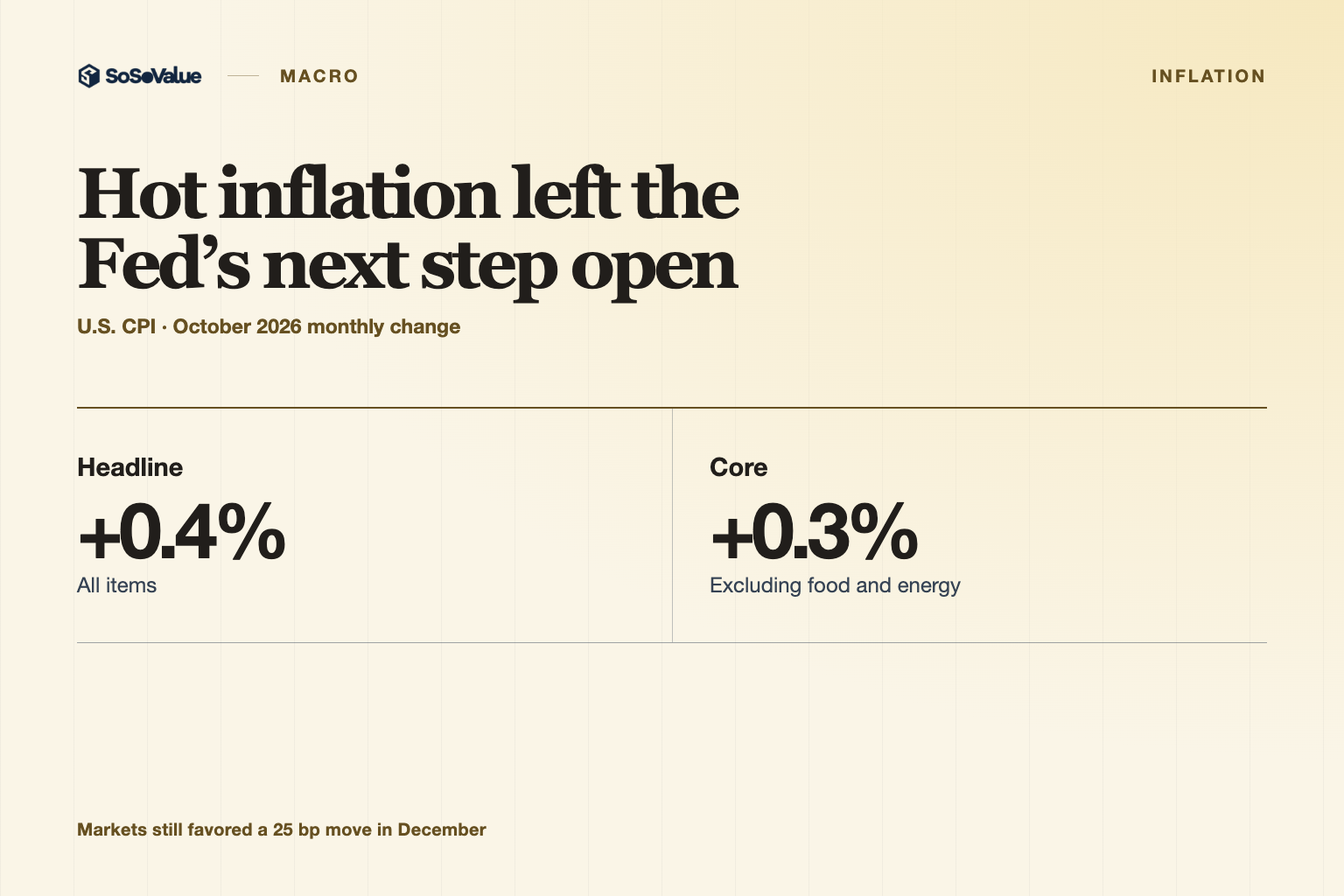
Headline prices rose 0.4% month over month as energy growth slowed to 0.7% from September’s 5.2%. Core prices rose 0.3%, the third straight month at that pace. Shelter and several services categories kept pressure on the measure even as used vehicle prices fell.
The October figures were stronger than the expected 0.3% headline and 0.2% core increases. Shelter climbed 0.3%, motor vehicle insurance rose 0.7% and hospital services rose 0.8%, according to the release. Used vehicle prices fell, which pushed in the opposite direction. The persistence in services helped explain why a slower increase in energy prices had done little yet to reduce underlying inflation.
The size of the next hike had a higher bar
Governor Christopher Waller said a core reading around 0.3% could warrant considering a half-point December move. The release met that condition. One snapshot of Polymarket pricing cited in the research still assigned about 86% to a quarter-point hike and under 10% to a move of at least half a point. Those prices tracked traders’ views at the time and differed from an official commitment.
Waller’s case for a half point focused on whether policy was restrictive enough. Dallas Fed President Lorie Logan framed the question in real terms. If the policy rate adjusted for inflation is below the level that keeps demand in balance, steady nominal rates can leave spending strong. In the data available at the time, third-quarter real GDP was estimated to have expanded at a 3.4% annualized pace and October unemployment was about 4.1%.
Borrowers face a path, not one meeting
Two quarter-point increases deliver the same cumulative change as one half-point increase, with a different timetable. The market test was whether core inflation would stay firm even if energy prices cooled, extending the period during which companies and households faced high refinancing costs.
The two-year Treasury yield rose about 18 basis points to 4.73% on November 10 and the ten-year yield by roughly 13 basis points to just under 5%, according to the pricing in the research. That pattern was consistent with a bigger adjustment to the expected near-term path than to the longer-run rate. Companies refinancing short debt can feel that change faster than firms with longer maturities.
A quarter-point increase could therefore come with a significant tightening in market rates if investors extend the expected hiking cycle. Faster energy disinflation would take some pressure off the headline figures. Sustained improvement in shelter and other services would be more likely to shorten the period for which investors expect the Fed to keep borrowing costs high.