


By Edward Chenug
Crude oil fell sharply on November 9 as diplomatic signals raised the possibility of a pause in the war involving Iran. The scale of the move owed something to how much risk traders had built into prices. Returning to dependable supply would require several parties to make commitments and shipping companies to trust that those commitments would hold.
Several governments had reason to seek a pause
The November research examined how elections in the United States and Israel changed the political costs of continued hostilities while Tehran faced economic pressure. The public statements suggested an opening for negotiation. They left the parties’ positions on enforcement and security unresolved.
U.S. and Israeli election results were changing the political cost of continued hostilities. Washington faced pressure over the economic fallout of the war, while Tehran had reasons to seek relief for its economy. Israel’s political transition added another decision maker and another timetable. Those incentives made negotiations more plausible. The parties still had to agree on what a pause would cover and how to verify it.
Several stories can move the same barrel
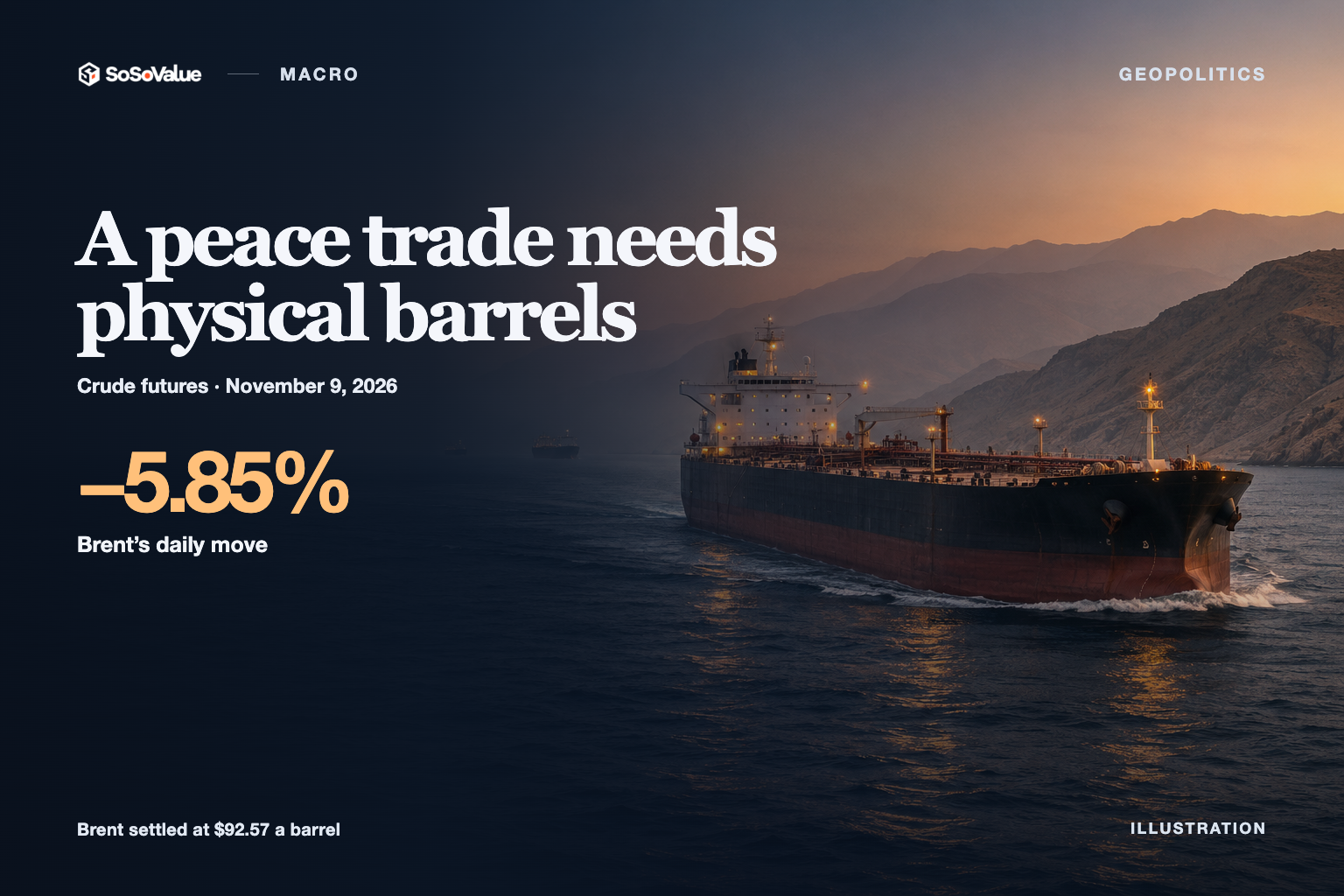
January Brent settled at $92.57 and December WTI at $86.85 on November 9. Prospects for diplomatic progress mattered. So did signs of recovering supply and related talks affecting other sources of oil. Changes in futures prices reflected the joint impact of these developments.
The selloff was larger before settlement. WTI touched $85.02 and Brent $90.56 before each closed off its low. That intraday pattern matters for buyers managing fuel costs. Traders can quickly reduce the probability assigned to a severe shortage, while suppliers continue to charge for the risk that cargoes may be delayed or rerouted.
Supply was already showing signs of improvement outside the headlines. A Reuters survey put the increase in OPEC output at about 1.38 million barrels a day in October. Traders were also taking account of discussions affecting other sources of oil. More supply elsewhere can lower the price of insuring against one disruption, depending on whether those additional barrels reach the same buyers at the right time.
Follow confirmations in physical markets
A durable decline would be easier to justify if more tankers transited reliably, insurance costs eased and exports stayed up. Negotiation setbacks could raise the risk premium again even if end-user demand weakened. The political headlines provided a probability signal. Shipping and supply provided a way to check it.
Shipping provides three tests of that improvement. Sustained tanker transits indicate that carriers are willing to make the voyage. Falling insurance and freight rates show that they require less compensation. Higher export and delivery volumes show that additional cargoes moved through the system. Price can anticipate all three. The November move was a bet that the probability of those improvements had increased.