


What It Took to End an Eight-Day Selloff in Semiconductor Stocks
By Edward Chenug
Semiconductor shares fell for eight straight sessions in October 2026 as investors questioned whether customers could keep financing the AI buildout. The first day of recovery was led by memory shares. That reversal reflected some confidence in the order outlook, although lenders and equity investors were still making different judgments about the customers that needed to pay for the next wave of equipment.
The selloff reached across the supply chain
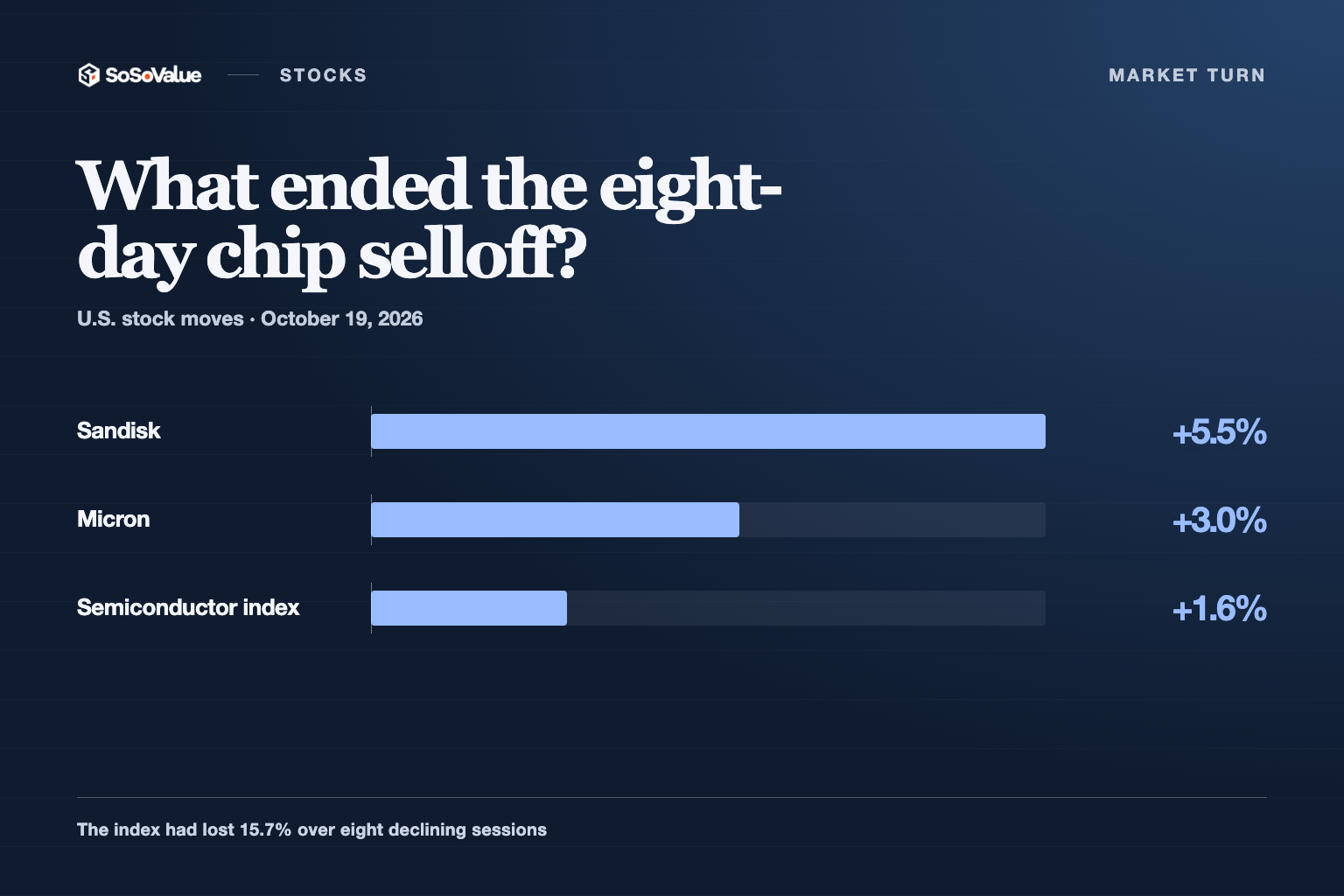
The Philadelphia Semiconductor Index lost 15.7% over eight declining sessions. Selling hit design, memory, equipment and compute infrastructure. Financing pressure at customers mattered to suppliers because equipment orders could be delayed while an operator waited for new cash or a site to become usable.
CoreWeave fell about 25% in the week preceding the rebound. Sandisk and optical supplier Lumentum each lost nearly 18%. Yields on some CoreWeave bonds climbed above 15%, evidence that the selloff was affecting the cost of financing as well as equity prices. New demand for chips carries less weight in a valuation when some of the buyers need to borrow at higher rates to fulfill their orders.
Memory led the first recovery
The Philadelphia Semiconductor Index rose 1.6% on October 19. Sandisk gained 5.5%, Micron rose 3% and the U.S.-listed shares of SK hynix advanced 4.7%. Participation was strong in memory, which left some of the previous week’s other sources of selling pressure unresolved.
The operating numbers remained stronger than the market’s reaction to the financing stress. TSMC reported third-quarter revenue of about $46.7 billion, above its earlier guidance, and projected $52.3 billion to $54.3 billion for the next quarter. On October 19, Sandisk and Micron led a reopening of exposure to memory. CoreWeave still ended slightly lower. The different moves reflected the cost of supplying a high-demand product compared with the cost of buying and installing it.
How a bounce becomes an earnings recovery
Suppliers need orders to convert into shipments and payments. Operators need equipment to convert into utilized capacity and recurring bills. If both happen in sequence, demand can support more durable valuations. Delays or refinancing stress at the operators would leave the suppliers exposed to the next round of revisions.
An operator may need to reserve power, sign equipment leases and accumulate interest before taking its first customer payment. A supplier can book orders earlier. An eventual recovery across both requires confirmed shipments, available financing and a rise in paid utilization at the new sites. The October rebound showed a willingness to buy suppliers again. The cash needed to pay for another round of orders remained the test of durability.