


Where Soros and Bridgewater Put Money After Cutting Nvidia
By Edward Chenug
In their third-quarter filings, some of the best-known investors on Wall Street reported fewer Nvidia shares and more exposure to companies supplying the same AI buildout. Their trades look quite different after adjusting for what they already owned. One manager retained Nvidia as a top position after trimming it. Another put more dollars into a manufacturer whose client and data center businesses were heading in different directions.
Start with the position that remains
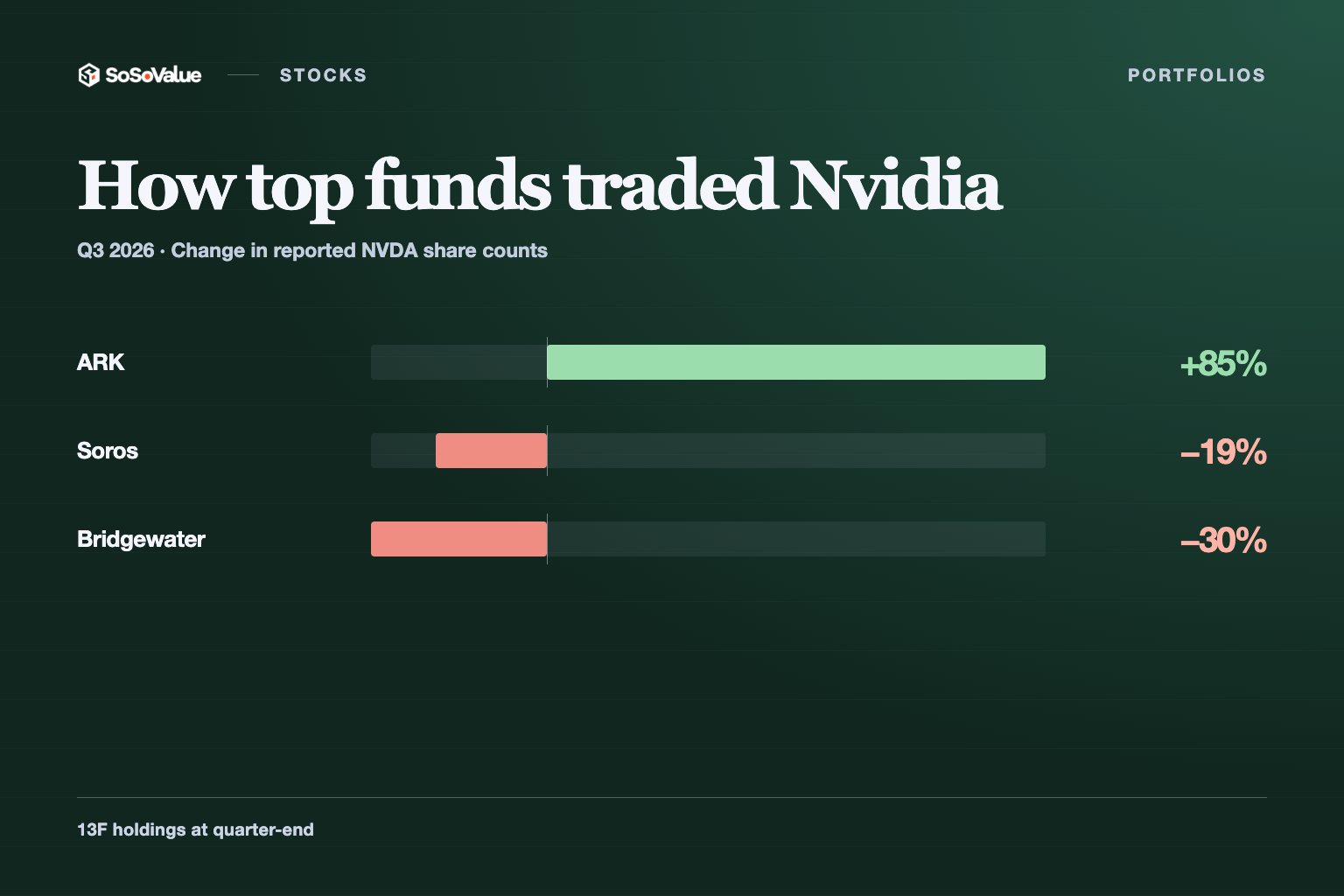
Bridgewater cut its Nvidia share count by around 30% in the third quarter of 2026, but the roughly $614 million stake was still its largest reported individual stock position. Soros Fund Management reduced its position by about 19%. ARK, by contrast, lifted its Nvidia share count by about 85% while cutting its AMD holding. The changes reveal very different portfolio decisions behind the same broad AI theme.
H&H International cut its share count from about 6.28 million to 2.32 million, leaving a $530 million position equal to about 3.1% of its reported 13F book. ARK went from 1.38 million shares to 2.56 million and ended the quarter with about $585 million of Nvidia. Those holdings were close in dollar value by September even though the managers took almost opposite routes to get there.
Follow the other parts of the supply chain
Soros added a new stake in SK hynix, while Baillie Gifford took a position in Lam Research. For both firms, those moves added exposure to parts of the supply chain beyond Nvidia’s processor sales.
Bridgewater increased the number of Micron shares it held by about 103% and Applied Materials shares by 93%. The positions ended the quarter worth about $253 million and $288 million, respectively, each still smaller than Nvidia. Soros made a different change. Its Intel position, valued at about $340 million, surpassed its remaining $196 million Nvidia holding.
Those choices expose each portfolio to a different driver. A chip designer benefits when customers choose its architecture and buy systems. A memory maker’s returns can move with pricing and changes in production. An equipment maker depends on the willingness of foundries and memory manufacturers to expand capacity. A broad increase in AI spending can reach each of those businesses on a different timetable.
Read the filing as a snapshot
A 13F measures reported holdings at quarter-end. It provides limited visibility into hedges, later transactions and the reasons for individual allocations. Compare the size of a position after the trade and the rest of the portfolio before drawing a conclusion about a manager’s view.
A rising share count can accompany a decline in portfolio weight if other holdings rise faster. A stable share count can look like a bigger bet after a price rally. Looking at both shares and market value exposes that difference. The filings showed diversification within an investment theme, with pronounced differences in exposure even among fund managers who reported the same trade direction for Nvidia.