


Why Tech Futures Fell as Congress Looked Set to Flip
By Edward Chenug
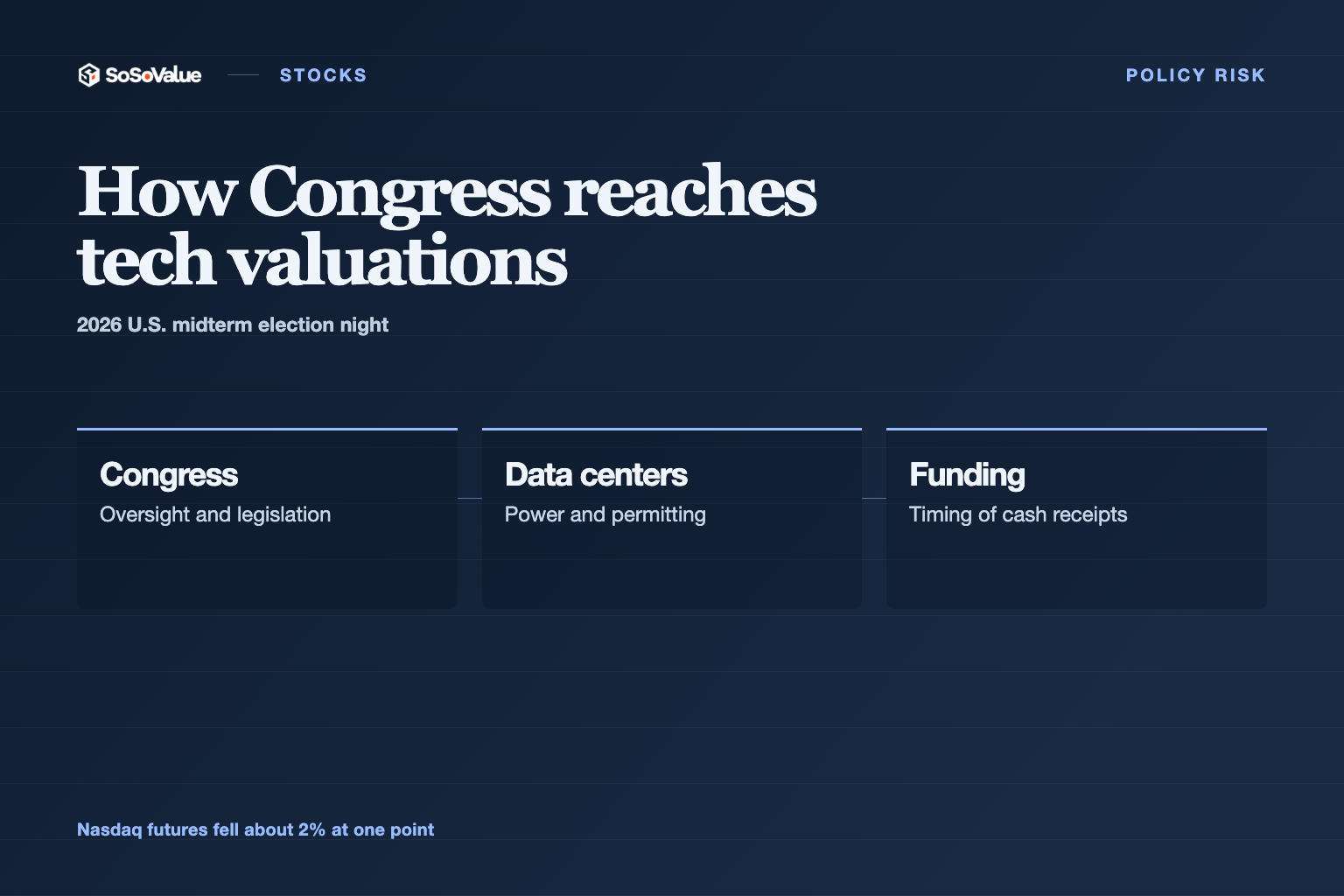
Markets entered election night expecting a Democratic House and with more doubt about the Senate. As the probability of a change in both chambers rose, technology futures came under pressure. Congress could affect the scrutiny of AI expansion, even though the financing and construction decisions behind a data center still ran through companies, states and utilities.
The Senate was the bigger surprise
The possibility of a Democratic House was largely anticipated. As projections pointed to Democratic control of both chambers, Nasdaq futures fell about 2% at one stage. The move came amid existing pressure on highly valued AI stocks and measured an overnight shift in expectations.
One measure cited in the research put the chance of Democrats taking the House at about 95% on the morning of November 3 and the Senate near 78%. Those odds varied with the source and contract. The Senate projection mattered because it changed the probability that committees in both chambers would pursue the same issues, from electricity demand to the use of public incentives for projects.
Congress can change the cost of waiting
A different committee agenda can bring hearings on power use, permitting and who pays for grid upgrades. Longer review periods can delay new capacity and receipts while interest keeps accruing. That exposure varies by project and by state, so the federal election alone could explain only part of the operating risk.
A congressional inquiry can change the way developers prepare proposals even before legislation is passed. Companies may be asked to explain who will pay for grid upgrades or how a project affects local utility rates. Permitting itself often sits at state or local level. The contribution of federal politics may come through hearings, financing conditions or pressure around the next round of approvals.
For investors, those processes connect through project timing. A delay can push back the day equipment begins producing revenue while debt and leases keep accruing. If that risk affects several projects at once, the financing cost used to value the developer can go up before analysts cut reported revenue.
Election odds and policy odds are different
Controlling two chambers gives a party leverage over hearings and legislation. The White House still had a role in whether a bill could become law, and the final terms would reflect negotiation across those institutions.
The Nasdaq-100 had already fallen more than 6.7% in October, so investors were confronting questions about cash returns before voting began. Election projections added to that existing uncertainty. A proposal that survives committee, wins support in both chambers and reaches the president’s desk carries a much clearer implication for project costs than overnight election odds alone.