


By Edward Chenug
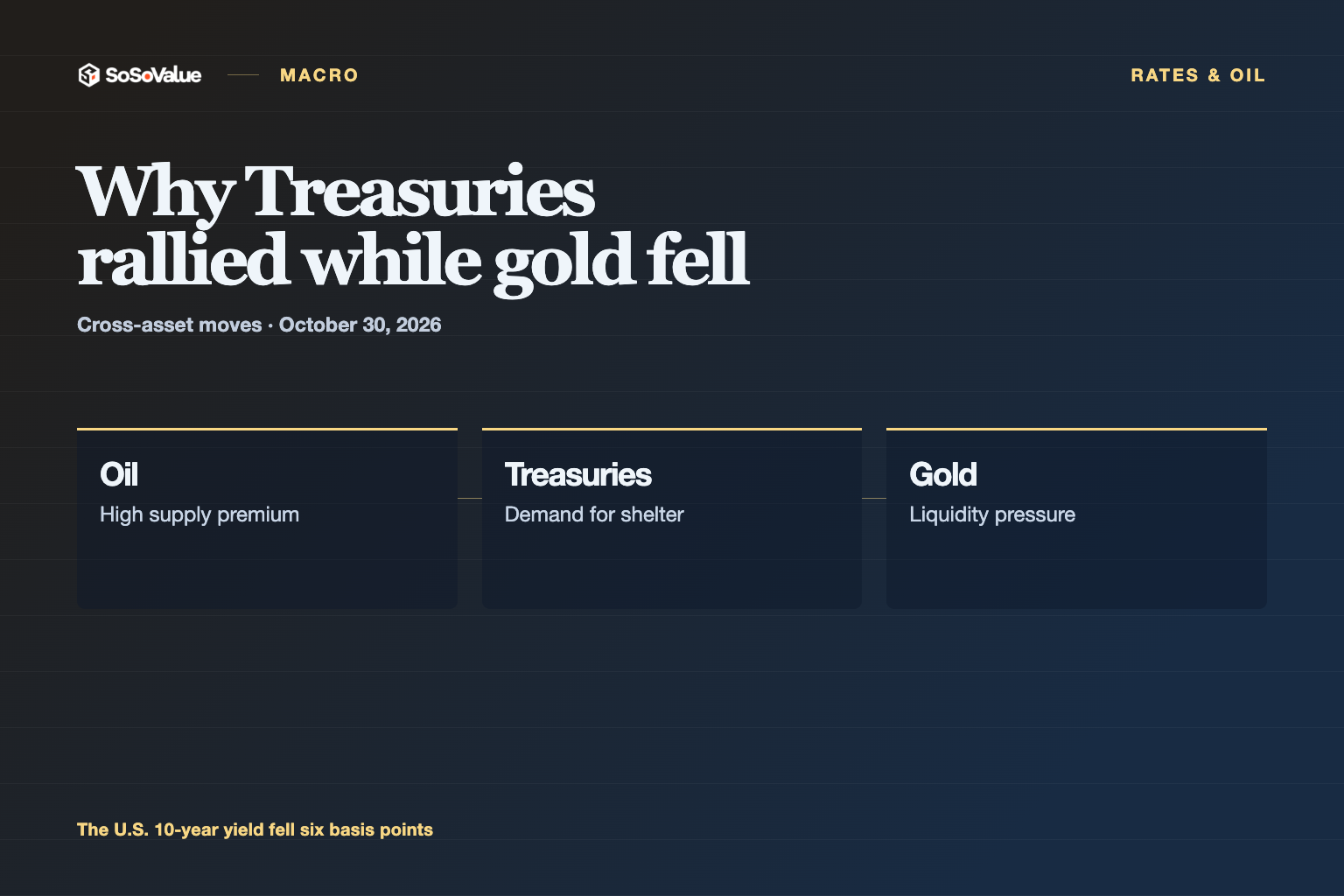
Oil rallied toward a seven-week high in late October 2026 as Treasury prices rose and gold fell toward a one-year low. The moves look contradictory if every asset is expected to respond to the same inflation signal. Demand for insurance against weaker growth, the cost of holding gold and the need for cash operated alongside the risk of disruption to energy supplies.
Oil kept inflation risk in the picture
Oil was pricing risk around transport and production. Diplomatic progress can reduce that premium quickly. Restoring regular cargoes requires changes in shipping conditions, insurance and actual deliveries.
An oil price increase driven by a supply interruption has two effects. It raises the cost of transport and inputs while leaving consumers with less money to spend elsewhere. A company can pass on those costs and risk selling fewer goods, or absorb them and report thinner profits. Either outcome can slow activity while leaving policymakers concerned about near-term price pressure.
Treasury buyers were pricing growth and risk
On October 30, the 10-year Treasury yield fell six basis points to 4.929% and the two-year yield dropped 8.7 basis points. A Treasury rally can reflect demand for predictable cash flows when stocks sell off, even while high energy prices give the central bank a reason to remain cautious.
The Fed had held rates steady on October 28. Two policymakers preferred a quarter-point increase. On October 30, falling equity prices and doubts about AI investment returns were another influence on the Treasury market. The yield on the two-year note fell to about 4.57% alongside a smaller drop at ten years. That pattern was consistent with defensive demand and a reassessment of growth, even amid a high oil price.
Gold had different funding dynamics
Gold earns no interest, making the opportunity cost higher when real yields remain elevated. Investors can also sell liquid positions to meet margin needs elsewhere. The session illustrates why safe-haven assets can behave differently. Sustained changes in shipping and energy supply would help distinguish a lasting improvement in inflation risk from a short-lived defensive move.
Gold can be a source of readily available cash when a portfolio has to meet collateral calls. Selling to meet that need can temporarily overwhelm demand for protection from inflation or political risk. Reuters attributed part of the late-October decline to that type of pressure. The high opportunity cost of holding an asset without income made gold’s reaction even less directly comparable with a Treasury bond paying a coupon.
A long-lasting improvement would involve both more reliable energy supply and easing pressure on company margins or credit. A drop in bond yields during a selloff can reduce discount rates on paper and still leave stocks under pressure if earnings forecasts fall and investors demand greater compensation for taking risk.