


By Edward Chenug
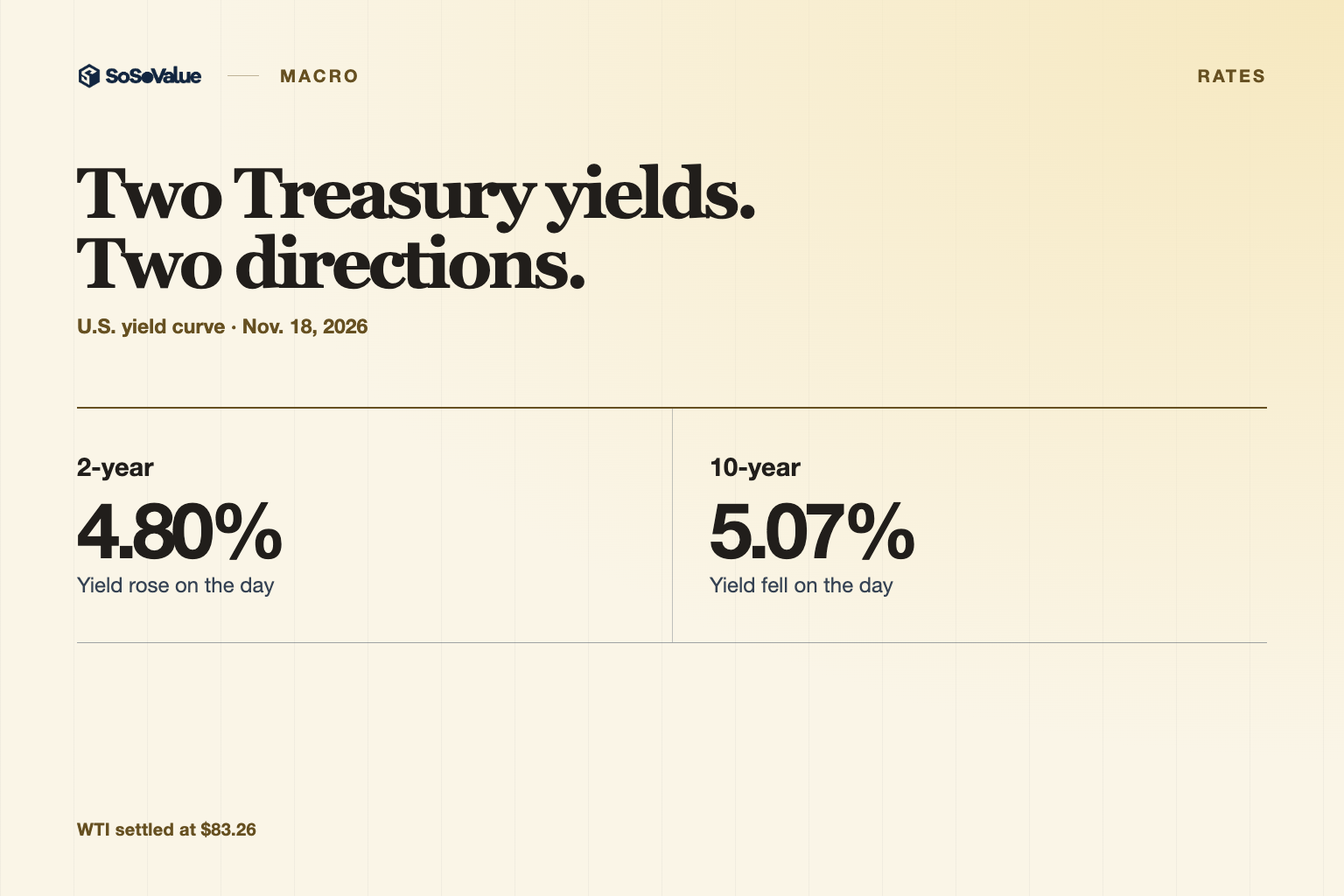
A Federal Reserve prepared to raise rates again ought to be bad news for bonds, at least at first glance. On November 18, 2026, Treasury traders split their verdict by maturity. Two-year yields rose as policymakers reiterated their concern about inflation. The 30-year yield fell more than five basis points, and the 10-year yield fell about three. The split showed how much of the December decision was already priced in and how quickly a separate shock in oil could move long bonds.
The Fed mattered most at the short end
The two-year Treasury yield edged up to about 4.80% on November 18, 2026, after minutes showed broad support for further tightening if the economy evolved as expected. Futures had already put the odds of a December quarter-point increase near 95% at one point. Traders needed a surprise about the size of the move or the path beyond it to reprice much more.
Governor Christopher Waller had argued for considering a half-point hike in December, with a quarter-point move followed by a clear signal about January as another option. His distinction mattered to contracts pricing the next meeting. A ten-year bond spans many such decisions. For that maturity, what matters more is whether the Fed’s move raises the expected average level of rates for years, or accelerates a tightening cycle that markets already expect.
Oil helped pull the long end lower
WTI fell 3.2% to $83.26 after U.S. crude and gasoline inventories rose. The 10-year nominal yield slipped from about 5.10% to 5.07%. Roughly two of those three basis points came from a decline in breakeven inflation, with the real yield accounting for the rest. Breakevens also contain risk and liquidity premiums, so they are an imperfect measure of expected inflation.
U.S. crude stocks rose by 3.4 million barrels in the weekly report, against an increase of just 58,000 barrels expected in a Reuters poll. Gasoline inventories added 5.2 million barrels. That combination suggested more supply available to U.S. buyers. On the Treasury curve, ten-year inflation compensation fell from 2.21% to 2.19%, and the corresponding real yield moved from 2.89% to 2.88%. The larger move came from the inflation component.
What would shift the next move
A drop in crude futures can change the inflation outlook at the margin in one session. Fed officials were assessing whether underlying prices and hiring were moving in the same direction.
The economic data explained why the short end remained sensitive. October employers added 165,000 jobs and unemployment held around 4.1%, according to the figures available at the time. The energy component of CPI had already slowed to a 0.7% monthly rise from 5.2% in September. Core CPI was still rising about 0.3% a month. That pattern gave policymakers room to focus on disinflation in services and shelter without treating a decline in oil futures as a change in policy.
A cheaper barrel can lower the premium investors demand for long-run inflation almost immediately. Lower core inflation would give that move staying power and eventually change the rate path priced into shorter bonds. November 18 offered evidence of the first effect; several months of broader price data would be needed to establish the second.