


What Unitree’s Shipments Tell Investors About Humanoid Robotics
By Edward Chenug
The humanoid robot market is full of demonstrations that show what a machine can do in a controlled setting. Unitree’s 2025 figures offered a different starting point for valuation: the company had already shipped thousands of machines and reported a profit. The next question was how much of that early lead would translate into customers that use the machines for paid work and buy again.
Shipping is evidence of manufacturing capability
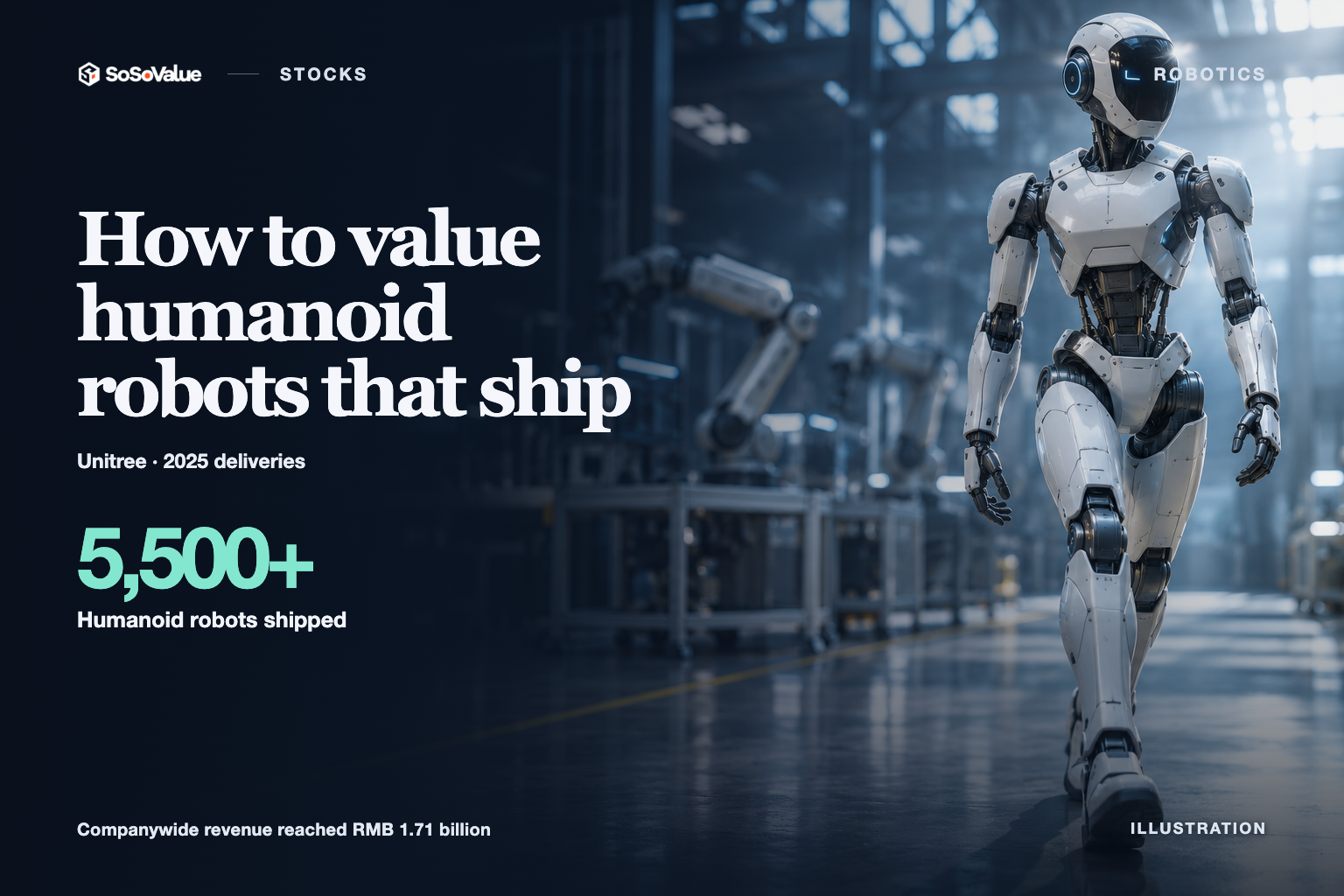
Unitree reported shipments of over 5,500 humanoid robots in 2025. Companywide revenue reached about RMB 1.71 billion, with net profit of RMB 288 million, as cited in the source research. The shipment count measures humanoids. Revenue and profit apply to the whole company, including products outside that category.
Unitree said its shipment count exceeded 5,500 humanoids sold and delivered to end customers. The figure is narrower than its production volume and measures machines delivered rather than orders recorded. That is useful for comparing manufacturing and logistics across developers that may disclose different milestones. It also means a comparison has to account for product mix, prices and how many machines remain in active use.
A roughly 17% companywide net margin, calculated from the revenue and profit figures in the filing, offers another point of evidence. The company also sells products outside the humanoid category. The group’s profitability therefore shows that its hardware business was making money overall while leaving open how much each humanoid line contributed.
Operating customers provide a different test
Use in warehouses, energy facilities and other sites requires reliability, safety and service after installation. Industrials can provide test sites and routes to customers. A strategic shareholder alone does not ensure repeat orders. Deployment hours, service costs and conversion from pilot programs help measure commercial demand.
Strategic investors in industrial and infrastructure businesses can help a manufacturer reach environments that are hard to simulate. A utility might use a pilot to find which inspection tasks justify the cost, how often a person must intervene and how quickly technicians can repair a machine. A successful trial helps the customer write specifications for larger orders and gives the manufacturer feedback it can use in production.
Software value depends on use
A larger fleet can generate opportunities for improvements and additional services, contingent on the quality and rights to operating data. Investors evaluating the business can follow unit economics, customer concentration and evidence of software revenue separately from the number of machines shipped.
Scale creates a software opportunity if real-world use produces training data, better performance or new paid features. It also creates service obligations. Investors can compare the pace of repeat orders, uptime at customer sites and the cost of support with shipment growth. Those measures would help distinguish a profitable early hardware lead from an industrial business that can earn recurring returns at much larger scale.